
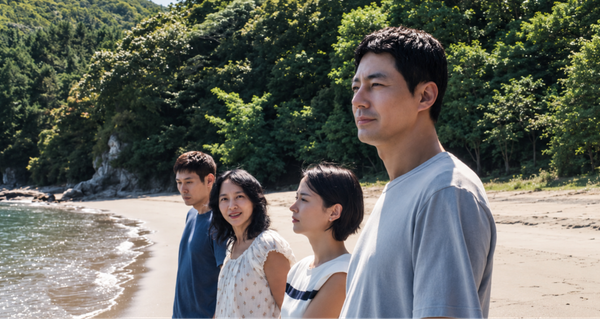
★★★★ (4 out of 4)
“I’m trying to love these people—I’m a documentary filmmaker.”
These are the words of said documentary filmmaker, the wealthy, pampered Ye-ji (Cho Yeo-jeong). She’s attending a funeral with a camera, as one does when you’re on the hunt for a big score and happens on a family argument. Ho-seok (Sul Kyung-gu) is bickering with his wife, Mi-ok (Jeon Do-yeon). He wanted to stay in the car while Mi-ok and their 10-year-old son, Choel (Jeong Seop), paid their respects to Ho-seok’s work buddy who killed himself after being laid off. Ho-seok, a welder, has also been canned, a pain he buries in a bottle. His drinking is a sore point with Mi-ok since he’s promised her he’d only drink in private. Hence the argument, which Ye-ji begins recording without permission, pushing Ho-seok’s anger past the legal limits.
And we’re off. At least Ye-ji is. Watching Ho-seok rage, she decides he’d be the perfect protagonist for her doc on working-class struggles. To persuade Ho-seok, she befriends his wife, who makes surgical masks and is rightly skeptical. But Ye-ji doesn’t give up easily. She invites the whole family to join her and her nepo baby husband Sang-woo (Zo In-sung) for a weekend at their cushy seaside home. And while Me-ok exchanges flirty looks with nepo boy, Ye-ji goes to work on getting Ho-seok to let out his frustrations on camera. Everybody wins and no one uses the word exploitation. They don’t have to.
Out of this material, director Lee Chang-dong, who wrote the bonfire of a script with Oh Jung-mi (they did 2018’s stinging “Burning” together), constructs what could have been a juicy soap opera of sex, lies, betrayal and even violence. But Lee always goes deeper, this time into the rotting roots of class resentment. His defining gift is making a private heartbreak expose a larger social wound. He gets under your skin quietly—and stays there.
One of the best movies of the year
In a pivotal scene, Sang-woo initiates a skinny-dipping romp under the guise of spontaneous, uninhibited freedom. It’s more like an exercise in absolute control. By stripping away their clothes, Sang-woo strips away the social armor of the working-class characters, exposing their physical and social vulnerability. While the water initially feels liberating to Mi-ok, the dynamic shifts when she observes Sang-woo and Ye-ji from a distance. In the moonlight, their effortless movements in the water mirror their effortless movement through life. She realizes that her presence there is a curated performance—she is an exotic novelty in their moneyed playground.
In a film of expertly realized performances, Jeon Do-yeon’s Mi-ok stands first among equals. She’s holding together a damaged marriage and a struggling family, yet remains funny, sharp, yearning and stubbornly alive. Mi-ok can be laughing, hurting and fighting for independence in the same moment. It takes Mi-ok longer to see what her son Choel seems to grasp immediately in terms of how adults spend most of their lives pretending. But her growing maturity is one of the film’s indelible glories. This is acting of the highest order.
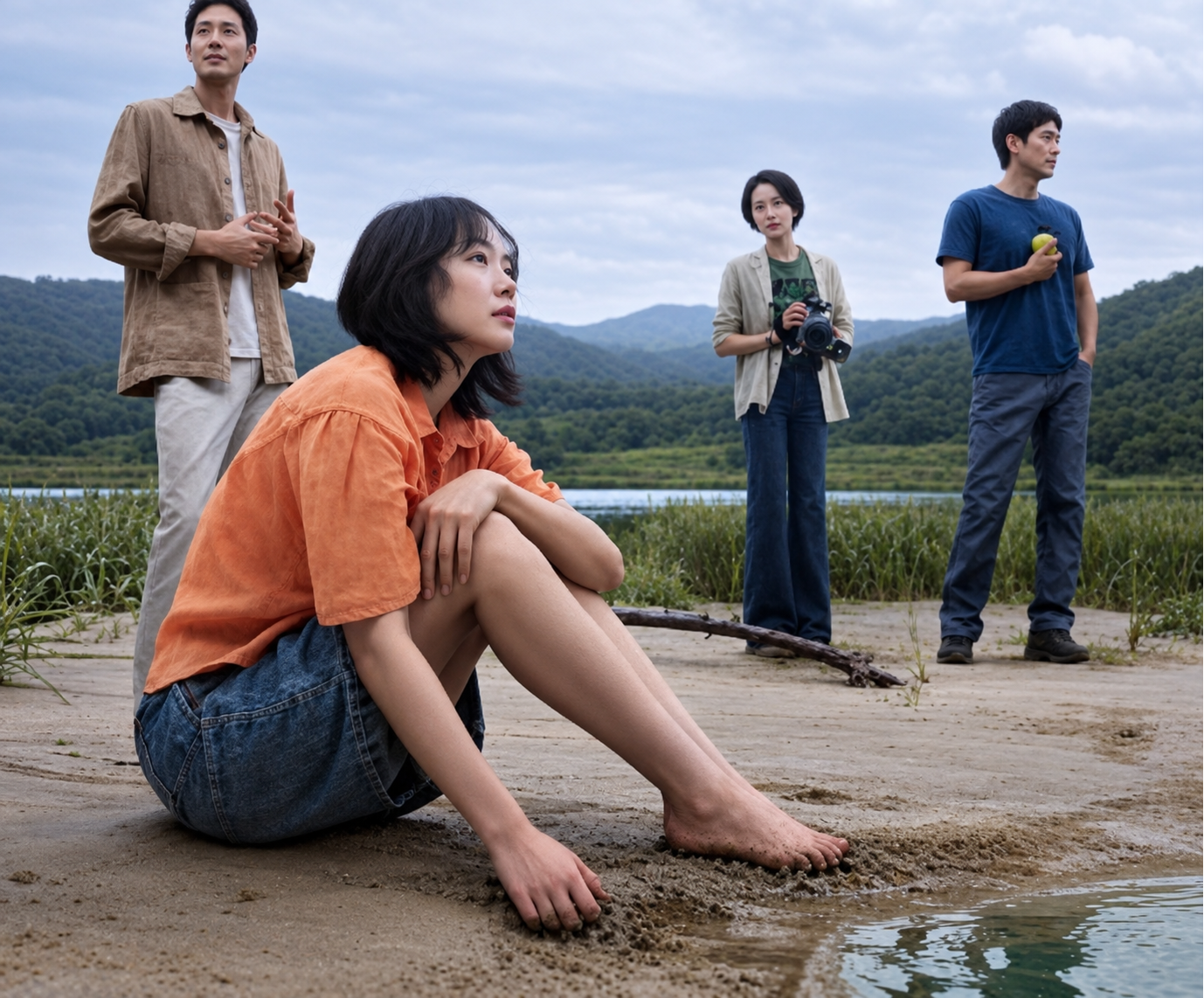
There’s little doubt that Lee Chang-dong and his team have created one of the best movies of the year. Don’t be put off by the subtitles, the 161-minute running time or the unfamiliar names and places. “Possible Love” is that rare film that matters. In theaters now, it has a real shot at reaching a wider audience when its debuts on Netflix on Nov. 6. And it won’t hurt that it’s already South Korea’s entry in the Oscar race as Best International Film. Just don’t let the title confuse you. Love isn’t possible because the condescending Ye-ji claims she’s trying so hard to relate to working-class characters in her doomed documentary. In this movie, love is possible when we all look at the same moon and reclaim reality. Will we flawed humans ever get there? It’s a tough order for one movie to fill. But “Possible Love,” lifted by Kim Ji-yong’s acutely observant camera and the probing chords of Jung Jae-il’s score, strips away agenda to get us whisper close.