
★★★½ (3½ out of 4)
You may not know much about “Peter Hujar's Day,” but the gatekeepers at the Film Independent Spirit Awards sure do. They bestowed this one-of-a-kind Ira Sachs dazzler with a 2026 record of five nominations, including for Best Feature, Director (Sachs), Lead Performance (Ben Whishaw), Supporting Performance (Rebecca Hall) and Cinematography (Alex Ashe). Whether it wins everything or nothing at the awards ceremony in February, you do not want to miss the enthralling experience of falling under its spell.
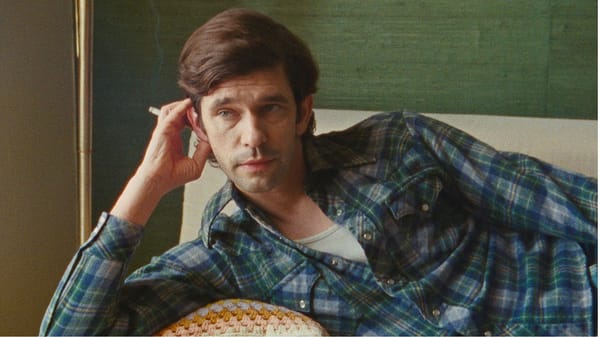
It began as an experiment between two friends. Peter Hujar, a chain-smoking, gay photographer from New Jersey played with wry nonchalance and churning intensity by Ben Whishaw, accepts a challenge from his Bronx-born writer friend Linda Rosenkrantz (the bracing, brilliant Rebecca Hall). She asks Hujar to write down everything that happened to him on Dec. 18, 1974, and to show up the next day at her apartment on 94th St. in Manhattan, where she would ask him to talk through the day in as much detail as he could muster. She’d record it as part of a planned project about the everyday details in the life of artists. Nothing momentous expected, but what is gained in the process defies glib description.
In a mere 76 minutes, director Ira Sachs and his virtuoso actors, Ben Whishaw and Rebecca Hall, have captured a specific world in universal terms and made a film for the ages.
The recording is lost, but a transcript remained that sparked director Sachs (“Keep the Lights On,” “Passages”) to think there was a movie in it. Impossible? You’d think. Two actors in a confined space—though they do go up on the roof—instructed by Sachs to act out the transcript with every throat-clearing cough, pause and rambling aside. Hujar, 39 at the time, was on a upward career trajectory that wouldn’t peak till after his death of AIDS complications in 1987. Rosenkrantz, a leading figure of the New York art world, famously dug for gold in talk, conversation, gossip, names and words. At 91, she still does. But Hujar remains a strong focus (He once wrote to her, “You are my only real sweetheart”).
“Peter Hujar’s Day” captures a moment in time and of New York, which singer-poet Lydia Lunch described as “bankrupt, poor, dirty, violent, drug-infested, sex-obsessed—delightful.” And Sachs’s film catches all that glorious no-Internet/no smartphones atmosphere on the fly and in the space between words as spoken by Hujar and Rosenkrantz, who in later years would become the keeper of Hujar’s flame. Sachs has said that he and Whishaw share “a great passion for and curiosity about queer artistic history.” You can feel it in every frame.
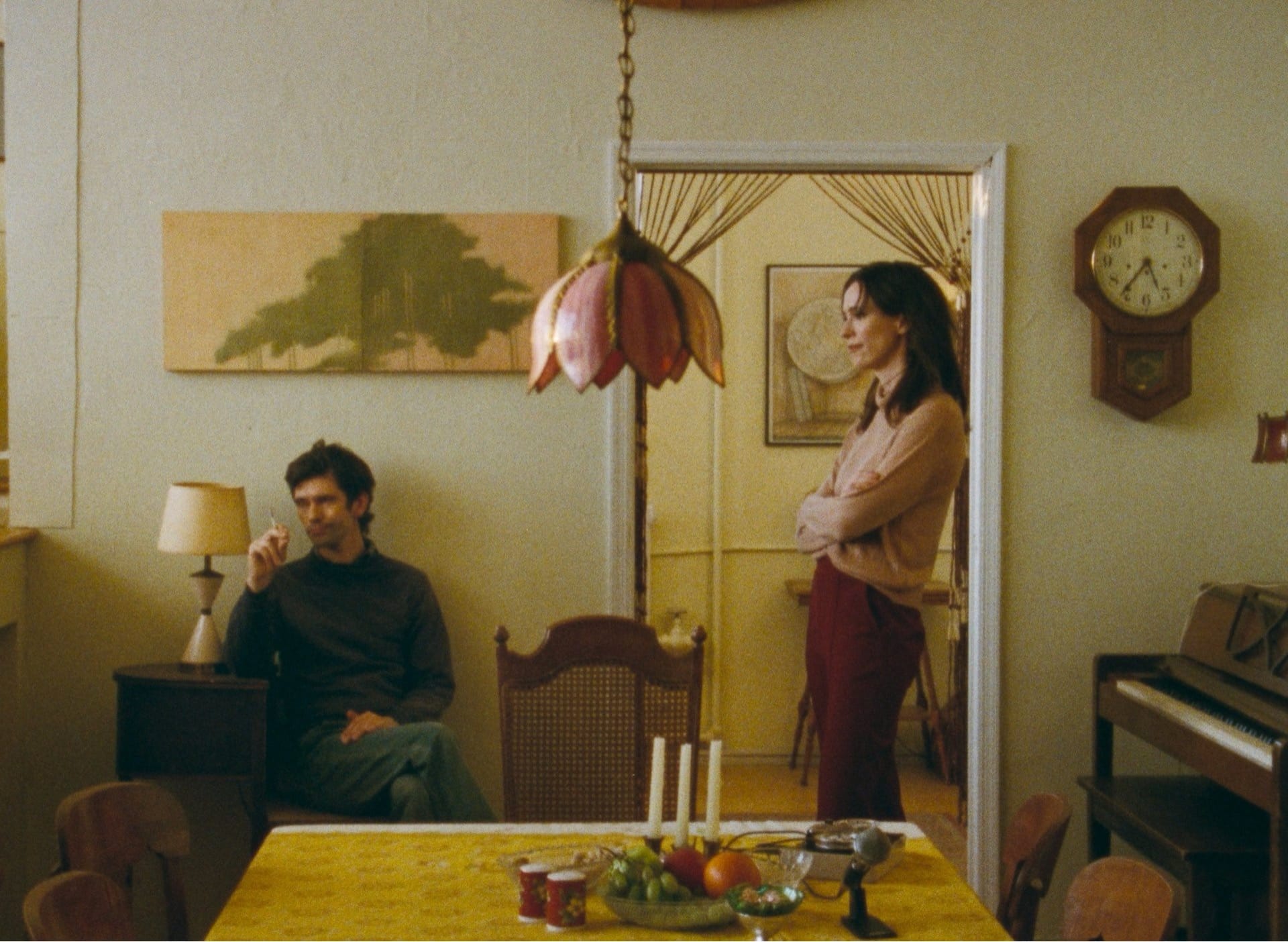
And so we hear Hujar speak in halting torrents of his day, everything from his frequent naps to his phone talks with Susan Sontag and Vince Aletti and Lisa Robinson and Glenn O’Brien to his struggle as a jobbing freelancer. And of his New York Times assignment, his first, to photograph the poet Allen Ginsberg in the beloved filth and muck of his apartment. “He sat down in the lotus position, looking very Buddha, right in the doorway, and started to chant,” Hujar tells Rosencrantz. “And I really thought, ‘Well, I can’t interrupt God.’” Later he adds of the Beat poet, “He gave out nothing.” The photos belie that, silently dominating their moments on screen. Hujar also details Ginsberg’s animus against the Times as a corporate entity as well as his advice to Hujar to offer sexual favors to difficult subjects like William S. Burrough to get better photos.
And so the film flies on the rhythm of this so-called ordinary conversation that miraculously becomes a time capsule of how people talked when unfiltered, when unencumbered by the demands of their reputations and public images. And we watch these two remarkable actors slowly blending into the real people they’re playing. Hall said of Rosencrantz, “She’s just by nature a curious listener. And there’s a quiet heroism in that.” Whislaw owns a significant Hujar photograph, a 1980 self-portrait of Hujar sitting naked in a chair, which became a key inspiration for the film. For the actor, Hujar is “a complex, sensitive artist whose quiet life's minutiae became extraordinary art.”
No argument from me. Among the remarkable accomplishments of “Peter Hujar’s Day” on screen is that in a mere 76 minutes, Sachs and his virtuoso actors have captured a specific world in universal terms and made a film for the ages.