
★★★½ (3½ out of 4)
Sebastian Stan, fresh from his Best Actor Oscar nomination as Donald Trump in “The Apprentice,” and Renate Reinsve, riding high off her Best Actress Oscar nod as a traumatized stage performer in “Sentimental Value,” team up for “Fjord,” a family drama about culture clashes, surface judgments and rigidity that prevent people from seeing more than one point of view.
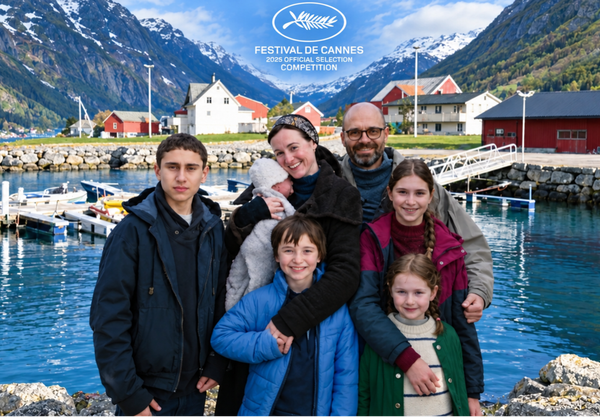
The poster for the film (seen here) features a Gheorghiu family photo, a smiling unit of Christian conservatives who move from Romania, where father Mihail (Stan) was born, to the small-town Norwegian birthplace of mother Lisbeth (Reinsve), where they can raise their five children in peace amid a progressive society.
Or so they think. Peace proves hard to come by as misunderstandings arise. Before long, after suspicions of child abuse surface, the Gheorghiu children are taken into the care of social services until a trial can resolve what is best for everyone.
This can make “Fjord” sound didactic, which sometimes it is. But Romanian writer-director Cristian Mungiu, the Bucharest New Wave auteur who won the coveted Palme d’Or at Cannes for “Fjord” (now Romania’s entry in the Oscar stakes for Best International Film), is a hardcore humanist. Mungiu won the same prize in 2007 for his compellingly complex abortion drama, “4 Months, 3 Weeks and 2 Days.” He steers audiences to think, not to take sides. He rarely uses closeups, keeping his objectivity front of mind.
Like only the best movies, you can’t get this one out of your mind and heart.
My advice is to approach “Fjord” by staying alert to Mungiu’s attention to detail. The new neighbors are friendly at first to the Gheorghiu family, who warm quickly to headmaster Mats (Markus Scarth Tonseth), his attorney wife Mia (Lisa Carlehed) and their daughter Noora (Henrikke Lund-Olsen), who bonds instantly with teenage Elia Gheorghiu (Vanessa Ceban), with a flirty vivacity that is hard to miss.
Mihail and Lisbeth insist that their children each do his or her share of work on the farm. It’s the hours of Bible study and hymn singing, led by Mihail, that seem a little strange to the locals. And that’s nothing compared to forbidden smart phones, internet browsing and modern music and dancing. In Norway, there is something alien about these new people.
Thing get worse when a gym teacher notices a bruise on Elia’s neck and reports it as something more than a playground accident. Mihail and Lisbeth are brought in for questioning. They admit to the occasional spanking but are swiftly rebuked. Suddenly and with no proof, these new parents are monsters and provincial justice steps in to separate them from their children, including the baby. A terrified Lisbeth begs Mia to represent them in court in trial scenes, recalling “Anatomy of a Fall,” that feel like the closing of a trap.
In his first film made outside Romania and his first shot partly in English, Mungiu directs scenes to highlight how cultural differences in discipline become regarded as suspicious, even menacing. Some have accused Mungiu of being MAGA in his support of these Romanians and his condemnation of the progressive rush to judgement. Neither is true. What this filmmaker is showing is how we as people retreat to our spheres of influence when our status quo is being threatened and common sense goes out the window.
Mungiu was primarily inspired by the high-profile 2015 child custody case of the Bodnariu family, a Romanian Norwegian evangelical Christian family living in Norway whose children were removed by the local child welfare authorities amid concerns over physical discipline (spanking) and traditional values. Said the filmmaker: “I think we live in a very polarized society in which you have these two groups of people who believe that they are right, that they have the one truth, and this has led to a kind of social violence which makes it impossible to live together in the same society. We are divided into groups that became so radicalized that we can’t find common ground.”
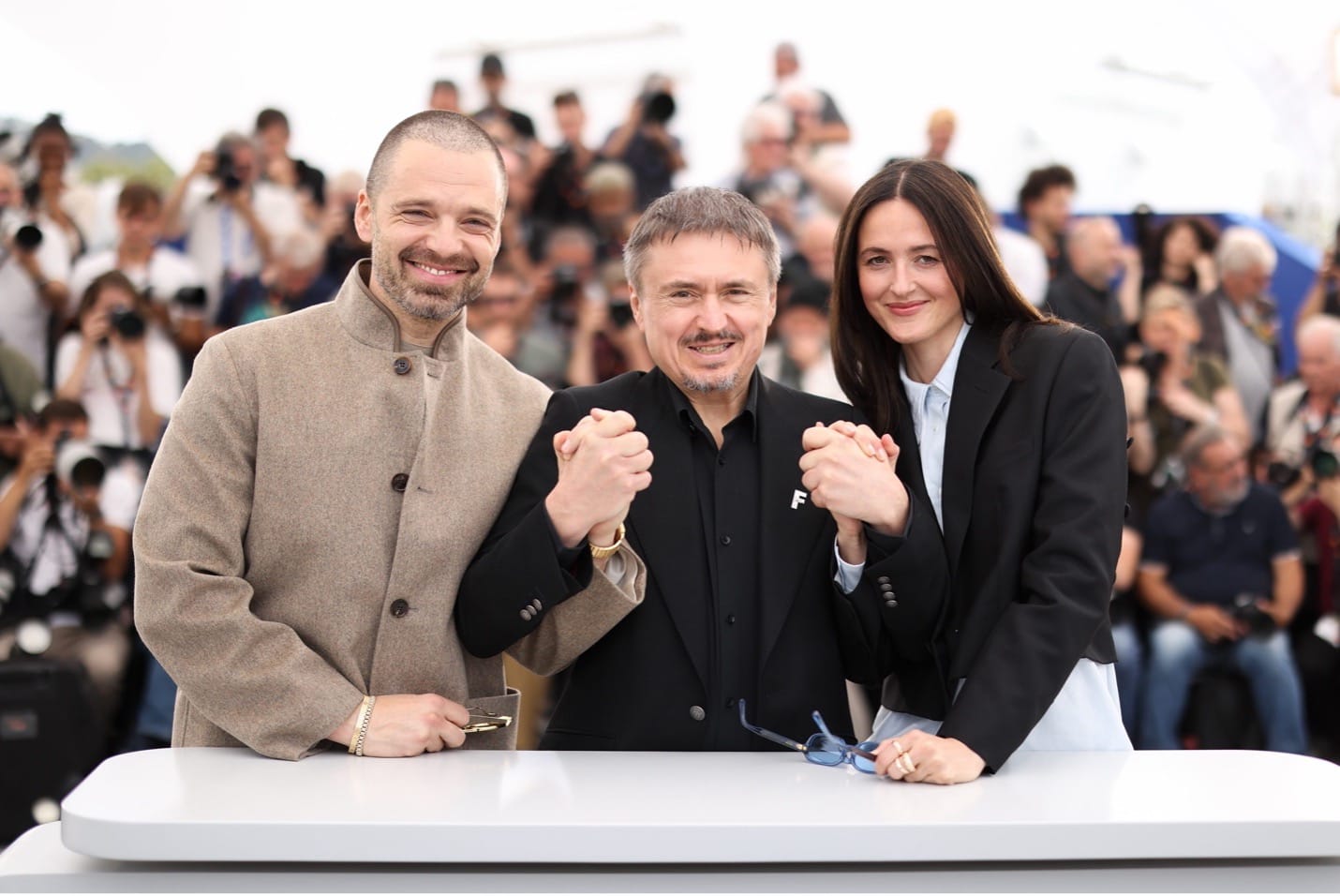
That is the tragedy that Mungiu dramatizes in “Fjord.” Or perhaps dramatizes is too strong a word. There are times when the filmmaker is restrained to a fault, out of fear of favoring one side over the other. That’s when you must look to the actors. Reinsve nails every nuance as a wife and mother facing an unspeakable loss. You almost breathe with her. And Stan, whether you know him as Marvel’s Bucky Barnes/the Winter Soldier or Carter Bazin on “Gossip Girl,” or for his Golden Globe-winning turn as an actor with disfiguring neurofibromatosis in “A Different Man,” you have never seen him like this. As the bald, bearded Mihail, a proud man forced to bottle up his emotions, Stan—speaking much of his dialogue in his native Romanian—delivers an award-caliber performance that stays with you. “Am I on trial for my beliefs,” he asks with an ache that resonates through every scene in this mesmerizer of a film that Mungiu makes sure will haunt you for a good long time.
Rooted in an ancient Norse word for "crossing" or "pathway," a fjord acts as a bridge between the mainland and the infinite ocean, symbolizing journeys through difficult or constricted phases of life. “Fjord” the movie is a journey to a place with no easy answers. But like only the best movies, you can’t get it out of your mind and heart.