

★★★ (3 out of 4)
If your memories of screen Robin Hoods run from the dashing likes of Errol Flynn, Kevin Costner, Russell Crowe, Sean Connery and even a cartoon hero in green tights, you’ll be shocked at the darkness Hugh Jackman brings to the role. The vehicle for this man of constant sorrow is “The Death of Robin Hood,” now in theaters where the geezer-ish, bushy bearded prince of thieves is an unregenerate son of a bitch. Death couldn’t come soon enough for this monster. Early on, we see him stab a woman in the back of the head. If this movie wasn’t set in the 13th century, Robin would be cancelled.
Jackman performs with absolute authority in a deeply dour performance that’s in marked contrast to the heroic swan song of “Logan,” a touching 2017 farewell from the actor to his famed X-Man, Wolverine. But at least old-man Logan/Wolfie went out protecting a mute, 11-year-old girl. Robin, who’s called Randolph here, also has a young girl to protect, but is it enough to redeem a life that left armies of dead men, women and children in its wake?
“He was no hero,” goes the tagline to the revisionist movie, written and directed by the gifted Michael Sarnoski, who guided Nicolas Cage to one of his best performances as the truffle hunting protagonist if “Pig.” From an opening in medieval times that’s brutal to the max, Robin is portrayed as a remorseless, bloodthirsty renegade who’s hardly the legendary rascal who robs the rich to give to the poor. Giving is not in his nature.
Hugh Jackman plays Robin Hood as an unregenerate son of a bitch. Those expecting a madcap romp should find other ways to forget their troubles and just get happy.
The film sets its dark tone early with Robin narrating: "I am the outlaw Robin Hood. I've killed so many, I could not give you a count. The hero, Robin Hood, protects the meek. No one protects the meek. My name, it’s a curse."
Alrighty then. Those expecting a madcap romp should find other ways to forget their troubles and just get happy. Jackman, fresh from the pleasures of having sheep detectives solve the mystery of who done him wrong, has to look inside Robin to quell his demons. And what he sees isn’t pretty.
The first third of the movie is all bone-crunching when Robin—I can’t call him Randolph, sorry—gets pulled back in by former merry man Little John (Bill Skarsgård), who needs help to protect his family from legions of Hood haters. Sarnoski and camera ace Pat Scola spare nothing when it comes to gouging and flesh ripping. All Robin wants is “a right death,” but damn, he lives!
That’s when the movie switches gears and starts sharing the near-dead Robin’s funk with a vengeance. Our man wakes up in a priory supervised by Sister Brigid (the sublime Jodie Comer), who offers kindness to one and all. There’s a leper (Murray Bartlett, shamefully hidden behind a mask), an injured boy (Noah Jupe), and Little John’s orphaned daughter (newcomer Faith Delaney).
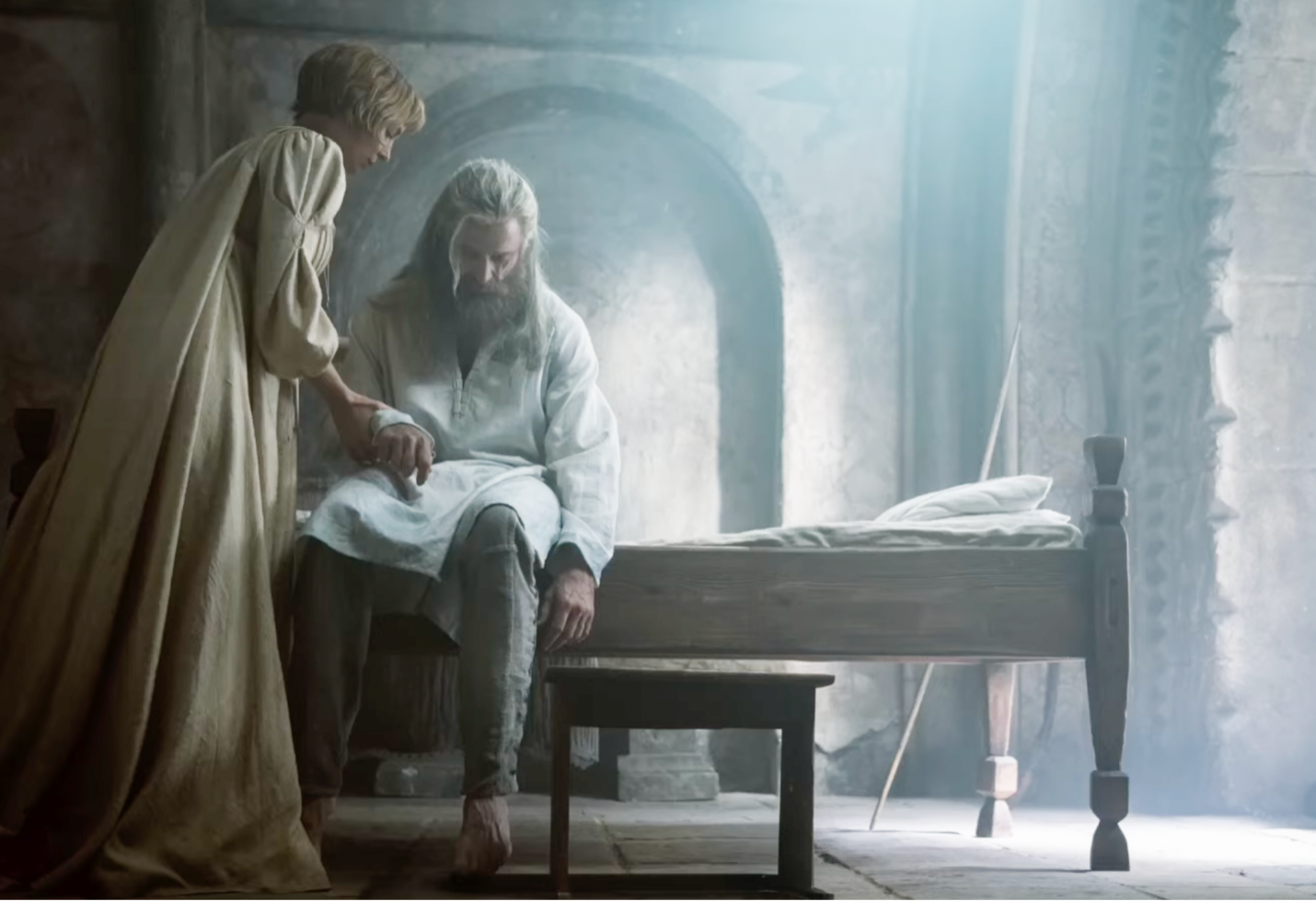
I wish I could say that these marvelous actors are given a fair chance to develop their roles, but Sarnoski saddles them with stilted, formal dialogue that muddies their connections. It’s Jackman’s stalwart commitment to the internal battle of his character that holds the film together.
In the priory where (almost) no one knows his identity, Robin can envision himself as a man without the myth. Can he regain his humanity in the process? That’s a trickier business. Just as Robin struggles to escape the ghosts of his past, moviegoers must try to untangle Robin from the fantasy created by Hollywood.
Despite the efforts of Jackman and Sarnoski, not everything coheres in “The Death of Robin Hood,” but the haunting and haunted vision that lingers is of a killer trying to figure out who he is when the killing stops.