

★★★ (3 out of 4)
Stodgy? Maybe. But “The Choral” comes to theaters reveling in its virtues as old-fashioned storytelling, I’d call it a crowd pleaser, except that I can’t imagine crowds lining up in to see a period picture—Yorkshire, England in 1916—where the pace is deliberate, the mood quiet, and the music classical. The drama is focused on WWI, which is conscripting men from 18 to 41 to the front lines, with many coming home wounded and maimed and others in coffins.
“The Choral,” written by Alan Bennett and directed by Nicholas Hytner, who collaborated on the film versions of such theatrical hits as “The Madness of King George,” “The History Boys” and “The Lady in the Van,” sees the world in microcosm. Its focus is on the fictional town of Ramsden, where the absence of young men has decimated the local choral society whose patriotic leader has just enlisted.
What to do? Find a new one, of course. But the pickings are slim. Local mill owner Alderman Duxbury (Roger Allam), who pays for the choral, is forced to settle on Dr. Henry Guthrie, played by the great Ralph Fiennes. He’s a controversial choice because this former organist and conductor has chosen to work in Germany for the past few years.
That choice is the equivalent of consorting with the enemy for the townsfolks, some of whom spit on Guthrie in the streets. They’d plain explode if they thought the rumors were true (they are) that the new choirmaster had a same-sex relationship with a younger German naval officer. How much can one town take?
Stodgy? Maybe. But its sincerity is a refreshing alternative to the glut of computer-generated junk that crowds our movie houses.
That commotion drives the plot as we watch the good women and a few older men of Ramsden audition for the choir. They include Joe Fytton (Mark Addy of “The Full Monty”), the photographer who takes photos of the men in uniform before they’re sent off to battle. One fun-loving trio of boys—Ellis (Taylor Uttley), Lofty (Oliver Briscombe), and Mitch (Shaun Thomas)—about to turn 18, are heart breaking in their eagerness to do their duty despite the dangerous stakes. It’s Lofty, in a poignant scene, who loses his virginity to choral member and sex worker Mrs. Bishop (the excellent Lyndsey Marshal). They politely shake hands in farewell.
A very British formality too often holds back emotion in “The Choral,” though a few actors break through, including Robert Emms as the choir pianist Horner (with an unreciprocated crush on the choir master, who warns Horner not to become a conscientious objector. He does anyway.).
Also making strong impressions are Emily Fairn as the mischievous Bella whose soldier boy Clyde (beautifully acted and sung by Jacob Dudman), returns home missing an arm to find his “dirty girl” has moved on. In the film’s only overt sex scene, she offers a hand job out of mercy. And his sadness is palpable.
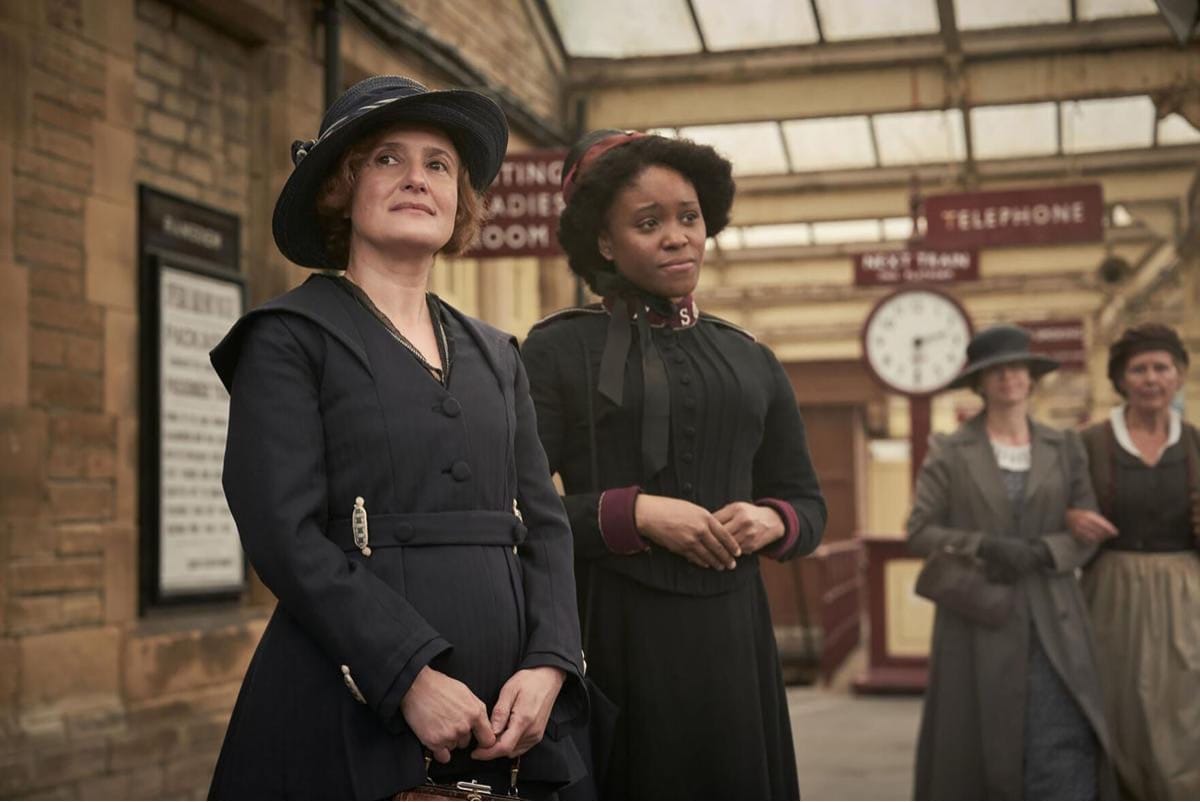
Most affecting is Amara Okereke as Mary, a member of the local Salvation Army with the voice of an angel, a fact that strikes the choirmaster from the first note. Okereke is a Nigerian British actress known as the first Black performer to star as Eliza Doolittle in the London revival of “My Fair Lady.”
Fiennes doesn’t have enough to do as Guthrie, but he quietly and movingly makes every second count as he and his makeshift choral put on a performance of Edward Elgar’s “The
Dream of Gerontius.” That titan of actors Simon Russell Beale (“The Lehman Trilogy”) shows up for a vivid cameo as Elgar, appalled at the changes Guthrie has made in his masterwork, especially making the old man hero of the oratorio into a wounded young soldier. The fact that Guthrie is trying to adapt a classic work fit its time is lost on Elgar.
And it may be lost on audiences who find Bennett’s script and Hytner’s direction too provincial and outmoded. They’re not wrong. “The Choral” juggles too many characters and themes to satisfy as a whole. Still, I applaud its sincerity and attention to detail, a refreshing alternative to the glut of computer-generated junk that crowds our movie houses in the name of commerciality. “The Choral” celebrates art as something true and lasting. Amen to that.