
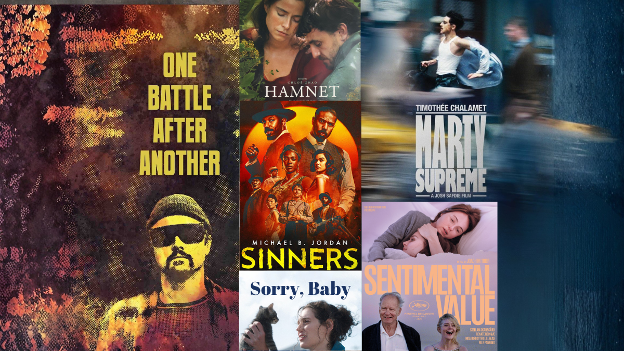
Movies were up against it this year. With a legacy studio like Warner Bros. on the verge of being swallowed up by streaming giant Netflix for a fast $83 billion, the days may be numbered for filmgoing as a communal experience. As the defanged revolutionary played by Leonardo DiCaprio says in “One Battle After Another”—my pick for movie of the year—"Freedom is a funny thing, isn't it? When you have it, you don't appreciate it, and when you miss it, it's gone."
Let’s celebrate those 2025 films that spoke out—sometimes loud, sometimes as quiet as a whisper—to express a personal vision.
So before it’s gone, let’s appreciate the freedom we had, at least for a time, to watch movies together in theaters. My top three 2025 picks—“One Battle,” “Sinners” and “Marty Supreme”—stretch out and play best with all those wonderful people out there in the dark. All three dance uninhibitedly and unforgettably to the tune of the American hustle. Movement is far more restricted in other parts of the world. Iran’s Jafar Panahi, the director of the brilliant, bruising “It Was Just an Accident,” knows from hard experience what happens when freedom is gone, having been imprisoned for speaking his mind through cinema.
So let’s celebrate those 2025 films that spoke out—sometimes loud, sometimes as quiet as a whisper—to express a personal vision, the species most endangered by a corporate monolith dedicated in the name of profit to make sure movies go down easy. Here are 10 movies that represent the resistance. Sound the trumpets.
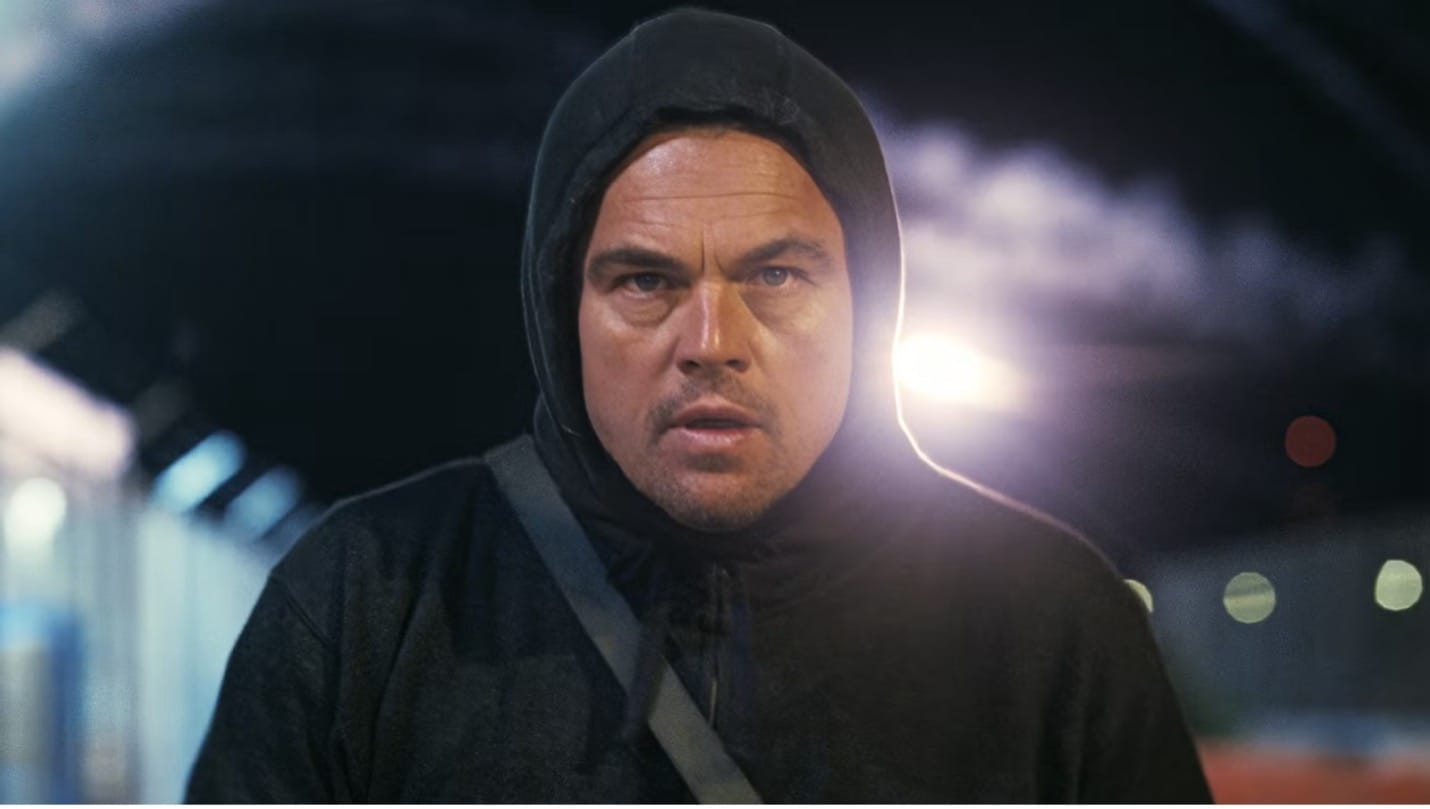
- “One Battle After Another”
Director Paul Thomas Anderson—PTA to his followers—has been making masterpieces for years now, from “Boogie Nights” and “Magnolia” to “There Will Be Blood” and “The Master,” so whether or not Oscar finally recognizes the radical talent in its midst, what we’ve got here is a flat-out American classic. Out of the bones of a tale about a father (a never-better Leonardo DiCaprio) trying to raise a daughter (a breakout Chase Infiniti) in the ashes of his once revolutionary fervor, Anderson distills America in one film. Set in an all-too-recognizable here and now, “One Battle After Another” strives to get it all in—a divisive electorate, rampant racism, shuttered abortion clinics, and hate crimes against migrants intensified by ICE raiders in masks. That’s a tall order in a Hollywood mired in the creative quicksand of lazy sequels, prequels and comic-book reboots in constant rotation. Every member of the cast comes up aces, including Sean Penn, Teyana Taylor, Regina Hall and a wickedly mischievous Benicio del Toro as a martial arts sensei with the vision to see a future in a toxic cloud of division. If there is a future of cinema, expect PTA to be leading the charge.
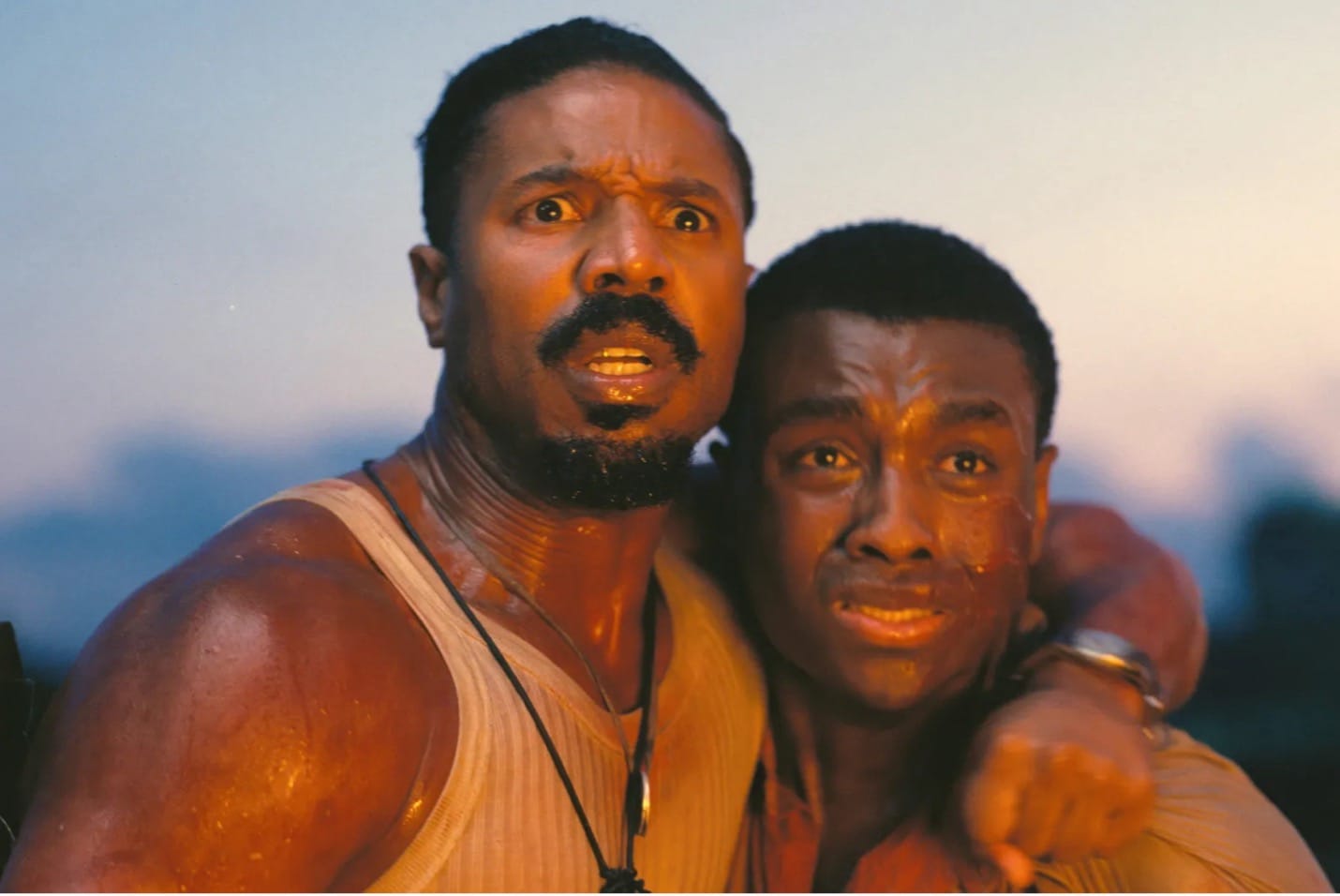
- “Sinners”
Ryan Coogler’s startling provocation about race comes disguised as a vampire epic, the better to fool you with, my dear. Coogler daringly casts his creative muse Michael B. Jordan as identical twins, known as Smoke and Stack, who are both on a mission. The time is a single day in 1932 and the brothers, having survived WWI and prospered by mobbing up in Al Capone Chicago, return to their Mississippi home in Clarksdale to build a juke joint carved from the joy and pain of Black America, expressed in sultry, sinuous music that speaks hard truths. In the Trump era, the predatory vampires of racism are still lurking outside the door asking to be let in with promises that will only make their prey complicit in their own destruction. How’s that for a chilling message for our time?

- “Marty Supreme”
With Timothée Chalamet leading the charge, director Josh Safdie sets up a life-or-death match for a 1950s kid who just wants to play ping-pong. It’s a beast of a role and Chalamet plays the damn hell out of it as Safdie takes us on as whiplash journey that swerves from comedy to darkness in a hot second. Marty Mauser sees himself as a winner even as a store clerk who “could sell shoes to an amputee” and a Jewish prodigy who calls himself “Hitler’s nightmare.” He can talk himself into bed with a married neighbor (Odessa A’zion) or a faded 1930s movie star (a revelatory Gwyneth Paltrow), but what Marty needs most is to get the world into bed with his idea of himself. Call him obnoxious, but don’t count him out.

- “It Was Just an Accident”
There’s no language barrier in the mesmerizing new tragicomedy and moral fable from the outspoken, often misjudged, sometimes jailed Iranian director Jafar Panahi. Sometimes body language and a shared humanity is all you need. This is one of those times. “It Was Just an Accident” is Panahi’s first film since being released from jail in Iran. It was shot without a permit from the Iranian government and features women not wearing a hijab to speak out against the country's oppressive hijab law. What’s it about? The official logline says, "What begins as a minor accident sets in motion a series of escalating consequences." As you can probably guess, that’s not the half of it as five Iranian dissidents debate killing their former torturer. Panahi is a world-class film artist who aches for justice for his traumatized characters. This is a cry from his bruised heart.

- “Hamnet”
Did you know that Shakespeare wrote “Hamlet” as a sorrow-soaked eulogy for his 11-year-old son Hamnet, who died of the plague at age 11? Probably not, since no one knows how Hamnet died or what motivated the Bard to create “Hamlet.” Back in 1590s, the internet wasn’t around to let people talk smack. But director Chloe Zhao’s film version of Maggie O’Farrell’s 2020 novel speculates with such rough tenderness about what grief does to the Bard (Paul Mescal) and his wife (Jessie Buckley is guttural, defiant, untamable in the performance of the year) that we are engulfed in the emotions on screen. Instead of biopic clichés, we find transcendence.

- “Sentimental Value”
Like “Hamnet,” this new cinema stunner from Danish-Norwegian director Joachim Trier probes the way an artist can cope with personal trauma through his art. Stellan Skarsgård gives the performance of his career as a celebrated film director Gustav Borg who hasn’t worked in 15 years or seen much of his two daughters, actress Nora (Renata Reinsve, reliably superb ) and wife and mother Agnes (the sublime Inga Ibsdotter Lilleaas). This part-time father and full-time narcissist needs their participation in his comeback film, despite his neglect. He even uses a young Hollywood star (a transfixing Elle Fanning) to further his agenda. Trier offers no phony uplift. But with the help of actors who could not be better, Trier take a sad song and makes it better. In these troubled times, that’s an exhilarating gift.
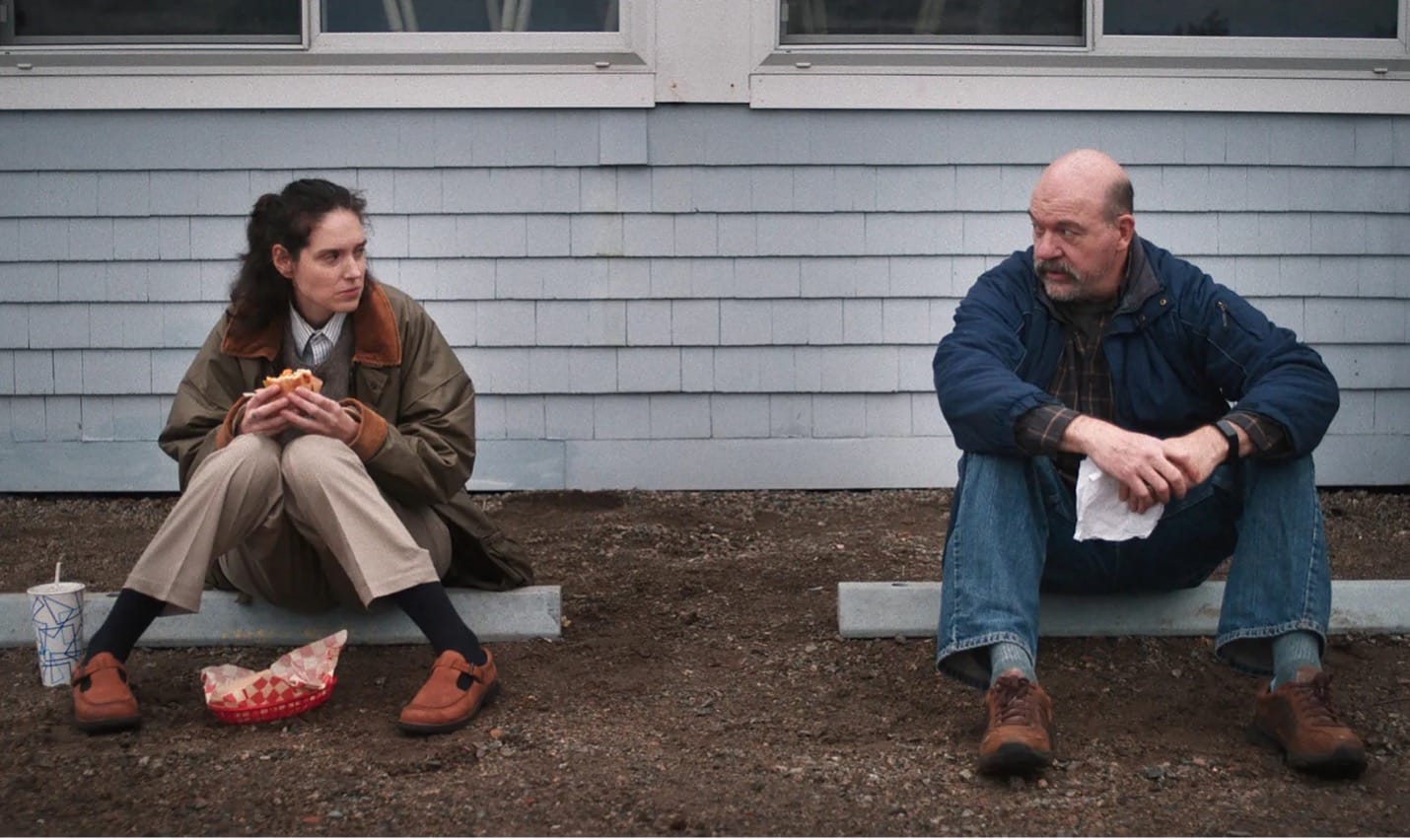
- “Sorry Baby”
Small in size and budget but huge in the scope of its feeling, “Sorry Baby” is the best movie of the year from a first-time filmmaker. Her name is Eva Victor. Remember it. Her writing award from Sundance and a Golden Globe acting nomination are just the beginning. Best known for her viral comic videos, Victor had a feeling that she might have the makings of a personal film, specific to her but universal in its reach, that would only gradually reveal a sexual trauma at its core. The film jumps in and out of five years in the life of Agnes (Victor), a New England academic, as she negotiates the before and after of her life. Lucky for us, Victor’s offhand, oddball humor never fails her, as when she asks the local sandwich guy (a lovely John Carroll Lynch) how long it takes to recover from trauma. No easy answers. Just an accumulation of details that add up to character and film that will live in your mind and heart.

- “No Other Choice”
This stinging satire of capitalism from South Korea proves we’re the same the world over when it comes to killing for the right job, the one that comes with cushy middle-class comforts. Director Park Chan-wook zips us into the collapsing life of Mansu, a downsized employee (the amazing Lee Byung-hun of “Squid Game”) who literally fights to the death for a job against the rising tide of A.I. scabs. “I have it all,” says Mansu, setting up a series of disasters, similar to what transpires in Bong Joon-ho’s Oscar-winning “Parasite.” The American owners of Mansu’s company are quick to lay him off and almost as quickly (three months) his severance runs out. Thirteen months later, all is chaos. As ever with Park, there are tasty bits of bright and bleak to noodle on. Good and evil are tackled, but with a rigorous fix on the complexity involved in showing the growing dehumanization infecting our world. Park has been trying for decades to make this passion project, a comedy with a tragedy at its core that carries in its bones the virus of what we’ve become. You’ll laugh till it hurts.
- “Train Dreams”
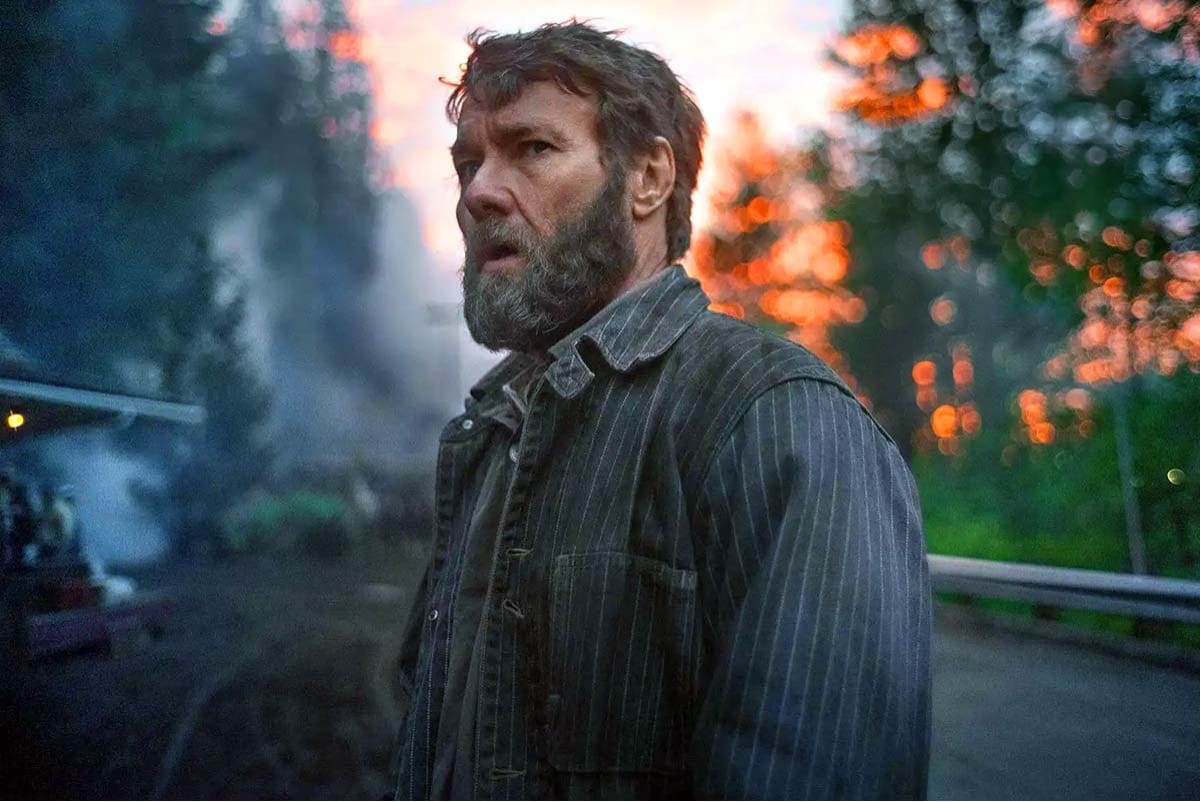
Out of the past when railroads were built to run and race against time, comes a cinema dreamscape that qualifies as a thing of beauty and terror. It exists in defiance of trends that say audiences go to the movies to hoot, holler and grow braindead to their problems for a few effing hours. Yeah, but not always. Director Clint Bentley, who wrote the script with Greg Kwedar, finds strength in the persistence that takes root in Robert Grainer, a logger and laborer on railroad construction projects in the Pacific Northwest at the start of 20th century. Though Grainier groans from backbreaking labor, often in the midst of fire and flood, you’ll barely hear a word of complaint from this bearded giant about it. So it seems fitting that this anti-showoff should be played by the grandmaster of subtlety, the criminally underrated Aussie actor Joel Edgerton. Here, in a performance of indelible implosive power, Edgerton strikes just the right notes of humanity under siege in a movie that actually dares to reach for the stars.
- It’s a tie between “Blue Moon” and “Novelle Vague.”
(Both films come from searching mind and heart of Richard Linklater, the Texas-born director whose curiosity takes him far afield, from the raucous fun of “School of Rock” to the tender ambitions of “Boyhood” and the “Before” trilogy. Commercial ambitions always take second place to following the cadences of the heart)
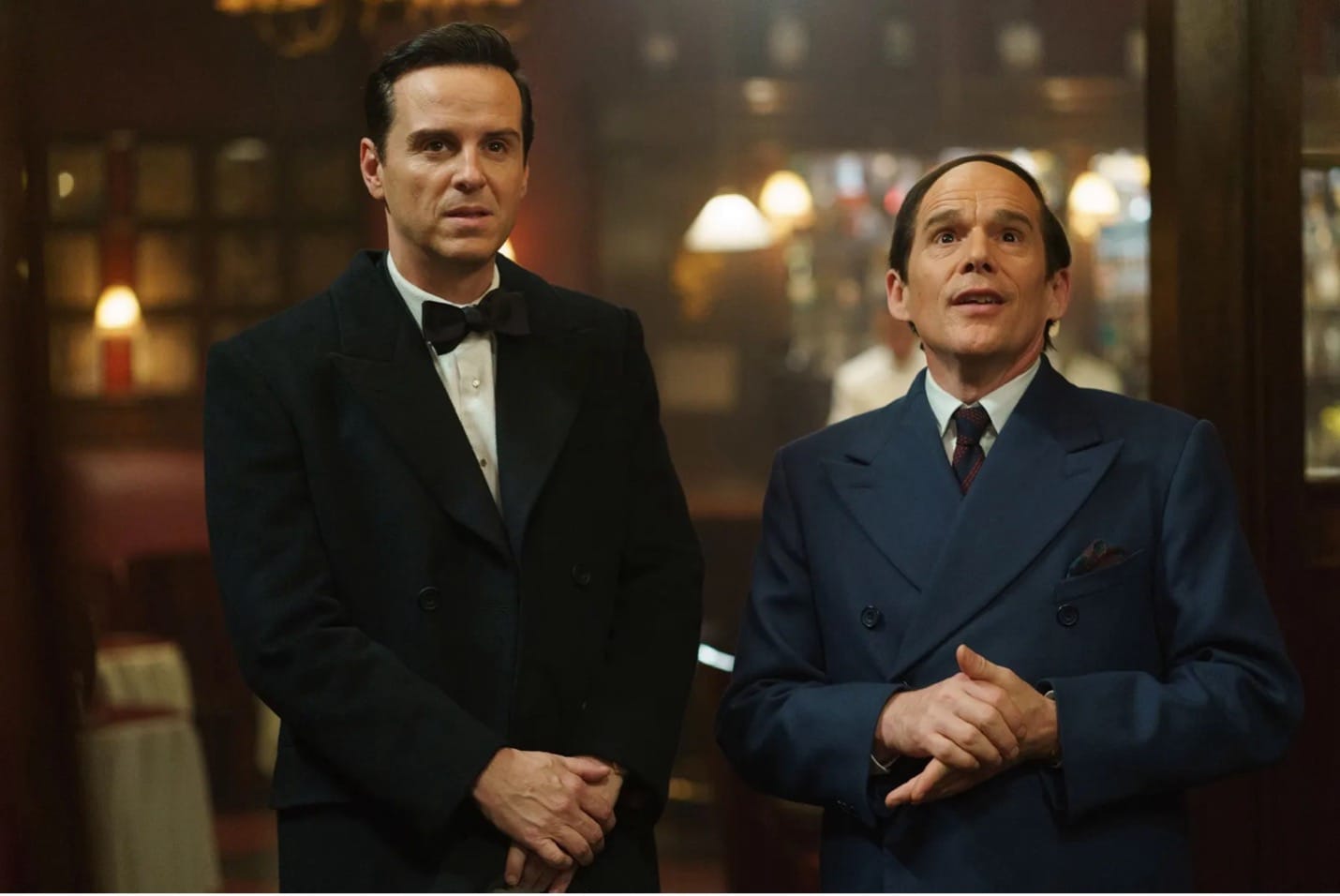
“Blue Moon” is Linklater’s ninth screen collaboration with his friend Ethan Hawke, who gives his best performance yet as Broadway musical legend Lorenz “Larry” Hart (1919-1943), a motormouthed genius and raconteur who felt the prodigious weight of his own depression, stemming from his diminutive height (he was barely five feet), his closeted homosexuality, his alcoholism, and a crushing loneliness he often expressed in the words he put to the music of his friend, composer Richard Rodgers (a brilliant Andrew Scott), in songs that are hardly clickbait for the Bad Bunny crowd. It shouldn’t work, yet everything does, thanks to Hawke’s deeply felt tour de force and Linklater’s eagerness to take stock of the creative process and the toll it can take on life and art.

“Novelle Vague” switches locations from Broadway to Paris where Linklater catches filmmaker Jean-Luc Godard (the fabulous lookalike Guillaume Marbeck) in the exhilarating act of creating the French New Wave and a whole new way of seeing movies. The astonishing Marbeck captures the essence of Godard—always with the dark shades and dangling cigarette—as an enfant terrible who thrives, like Larry Hart before him, on shocking, embarrassing and annoying everyone in his vicinity. That includes Jean Seberg (a wowza Zooey Deutch), the American actress he persuaded against her will to star in his debut film, the now legendary “Breathless,” released in 1960 (the year Linklater was born). In catching Godard on the rise and Hart in decline, Linklater caps this movie year on a note of abiding love for the spark of the creative process. Nothing could be more fitting.
The Best of the Rest: I can’t say goodbye to this year in cinema without sending flowers to such fresh voices as James Sweeney (“Twinless”), Carson Lund (“Eephus”), Alex Russell (“Lurker”), Mona Fastvold (“The Testament of Ann Lee”), Zach Cregger (“Weapons”), Emilie Blichfeldt (“The Ugly Stepsister”), Harris Dickinson (“Urchin”), Eric Lin (“Rosemead”), Akinola Davies Jr. (“My Father’s Shadow”), Harry Lighton (“Pillion”), Kristen Stewart (“The Chronology of Water”) and Lawrence Lamont (“One of Them Days”). As for the seasoned pros, there’s no denying the light of Guillermo del Toro (“Frankenstein”), Steven Soderbergh (“Black Bag,” “Presence”), Jim Jarmusch (“Father Mother Sister Brother”), Kelly Reichardt (“The Mastermind”), Yorgos Lanthimos (“Bugonia”), Kathryn Bigelow (“House of Dynamite”), Spike Lee (”Highest 2 Lowest”), Wes Anderson (”The Phoenician Scheme”), Ira Sachs (”Peter Hujar’s Day”), Noah Baumbach (“Jay Kelly”), Derek Cianfrance (“Roofman”), and Kleber Mendonça Filho whose "Secret Agent" is so damn transfixing I might want to redo this list and put it on top. That's how great movies make you feel as they shuffle through your head to seize pride of place. What's on your list of favorites this year? Let's compare and contrast.