
★★★½ (3½ out of 4)
Four generations of women grow up on the same farmhouse in northern Germany. If that sounds to you like a prosaic pastoral, won’t you be surprised. In “Sound of Falling,” the thunderously ambitious second film from the brilliant Mascha Schilinski, feelings delicate to crushingly brutal comingle to tell a century-spanning story about the dangers faced by women trying to negotiate a safe space in a world of men. “Sound of Falling” is Germany’s choice to compete for the 2026 Oscar as Best International Film. The honor couldn’t be more deserved.
The film follows four girls—Alma, Erika, Angelika and Lenka— from four different time periods (the 1910s, 1940s, 1980s and 2020s) into their secret hearts as they are subject to abuse, assault, even incest and yet persevere in their timeless battle against patriarchal control.
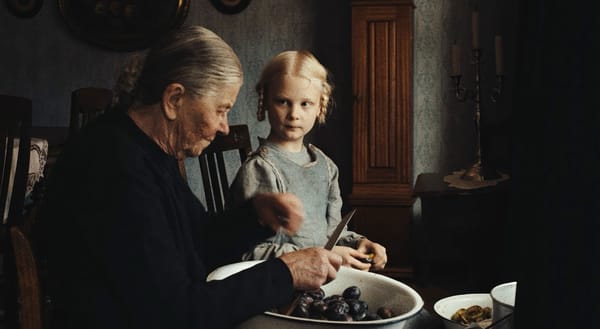
In the first segment, we meet Alma (a wonderous Hanna Heckt), a seven-year-old who occupies the farm with her bustling brood of siblings. Though daily work in the field is arduous, Alma finds it more difficult to deal with the presence of death, including a young boy and then her great-grandmother. Photos of dead relations cover the walls.
One thing is for sure about this century-spanning story about the dangers faced by young women trying to negotiate a safe space in a world of men—you’ll never forget it.
After her older brother Fritz (Filip Schnack) loses a leg in a work accident, Alma learns that her parents staged the mishap to keep Fritz from military service. As Alma absorbs the secrets and lies of adults without full understanding, she also watches the sexual advances drunk farmhands make on their young maid Trudi (Luzia Oppermann). She also blanches when her sister Lia (Greta Kramer), sent into service outside the farm, suffers a lethal accident and is now another death photo on the wall. Heckt registers these blows on a face that once only knew innocence.
.
During the war, the older Fritz—like a ghost from the past—is bedridden on the farm from his leg amputation and cared for by his teen nieces Erika (Lea Drinda) and Irm (Claudia Geisler-Bading). Erika pretends to be physically disabled, making quite a show of using Fritz’s crutches as if to ward off any hint of sexual provocation. It’s here that Schilinski and cowriter Louise Peter dig into the concept that these walls are alive with echoes of women who once suffered in silence. The hallucinatory result is hypnotic and haunting, often disturbingly so, in light of Erika having drowned herself after the war in full public view.
Flashing ahead to the 1980s, when the region is part of Communist East Germany, Irm now lives on the farm with her husband Albat (Andreas Anke) and their teen daughter Angelika (the excellent Lena Urzendowsky), who navigates sexual advances from Uncle Uwe (Konstantin Lindhorst). On the farm she takes dangerous risks with combine machinery. It’s not hard to see Angelika’s pain. The last we see of her is as a blurred image in a photo.
The final chapter in this hushed, deliberately unrushed 155 minute film again involves risk. Angelika's daughter, Christa (Luise Heyer), has renovated the farmhouse with her husband Hannes (Lucas Prisor). Life had been going well for the couple and their daughters Lenka (Laeni Geisler),12, and Nelly (Zoë Baier), 5, until Lenka bonds with Kaya (Ninel Geiger) and begins copycatting the older girl’s confidence and attraction for dangerous games, especially with men. Tragedy ensues as if Lenka’s pain has been transmitted through generations. The effect is unquietly devastating.
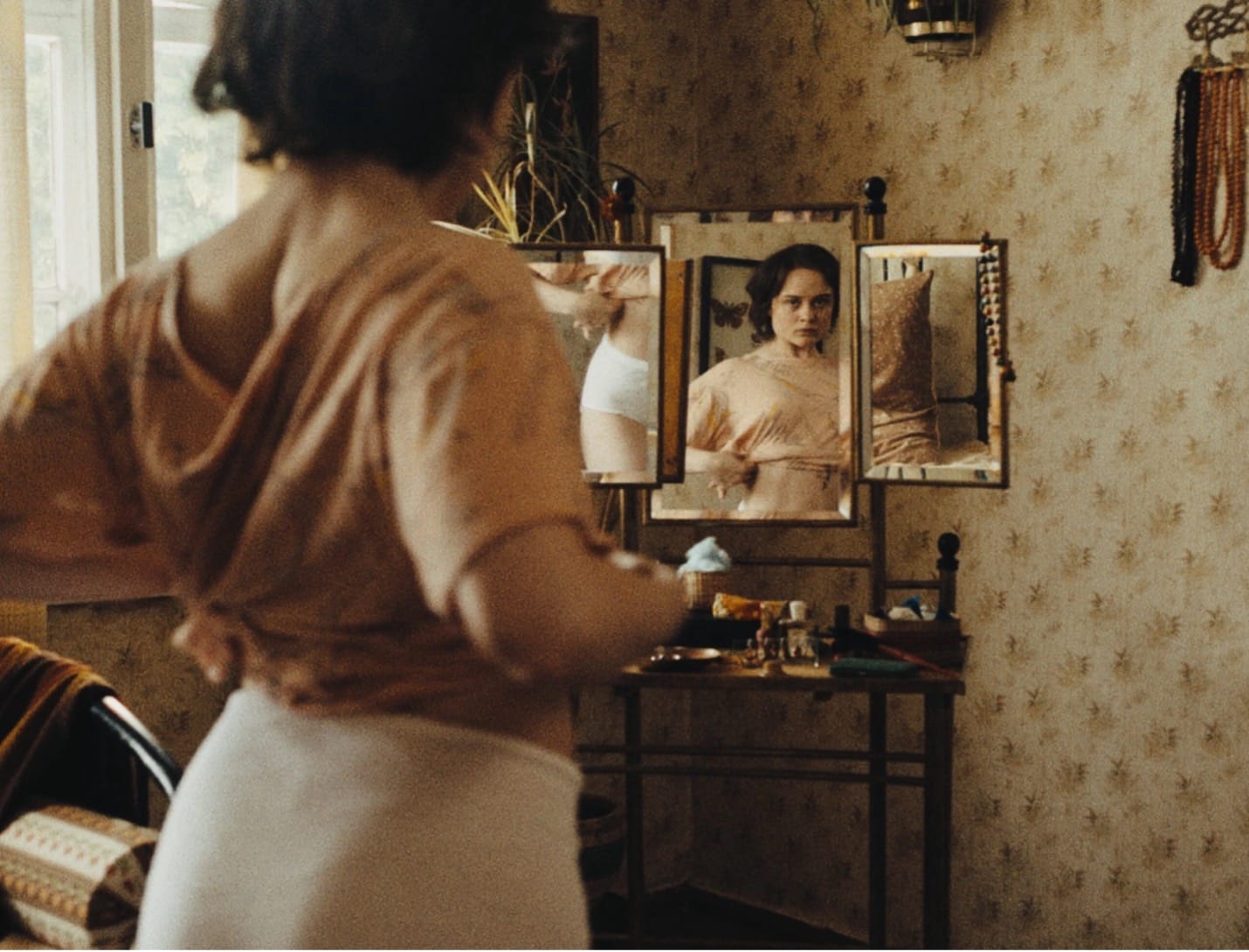
Together with the piercing camera eye of her real-life partner Fabian Gamper, Schilinski finds the unspoken trauma of these women in the space between words. Little is said out loud in “Sound of Falling” about the familial abuse, the inherited sense of shame and the forced sterilization that kept girls unpregnant and working. Here’s a film of beauty and terror that revels in the exhilaration of youthful high spirits in women on the brink and weeps for the fragility of a system that can’t or won’t keep them safe. One thing is for sure about “Sound of Falling”—you’ll never forget it.