
★★ (2 out of 4)
It’s a ballsy idea for family fun: a violent, gender-switched version of Shakespeare’s “Hamlet” as interpreted by Japan’s anime master Mamoru Hosoda. By all means, take the kids to see it in Imax, depending on their tolerance for bloody revenge tragedy consumed between mouthfuls of popcorn.
You see the problem here. “Scarlet” is pretty heavy material for the little ones, so take the PG-13 rating under advisement. Even then, parents will have to weigh the eye-popping visuals against storytelling that leans toward the ponderous. What’s next— an anime version of “Hamnet” starring the Kpop demon hunters? Please not.
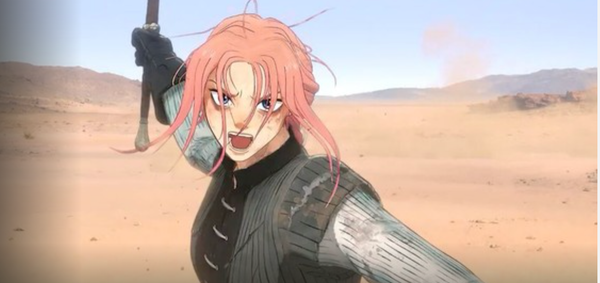
Here’s how the filmmakers lay out the plot of this time bending adventure: Scarlet (voiced by Mana Ashida) is a medieval-era, sword-fighting Danish princess on a dangerous quest to avenge the murder of her peacemaker father, King Amleth. The King’s brother, Claudius (Koji Yakusho), had falsely labeled Amleth a traitor, leading to the King’s execution. Scarlet, royally pissed off, vows vengeance.
What’s next— an anime version of “Hamnet” starring the Kpop demon hunters? Please not.
So far, so “Hamlet.” Things change when Scarlet, beset by enemies and poisoned by Claudius, finds herself near death in a surreal purgatory called the Otherworld. There she meets Hijiri (Masaki Okada), a paramedic from the present day who can’t believe he’s nearing death in The Otherworld and tries to dissuade Scarlet from her vendetta against Claudius, also present in this in-between place, with legions of troops at his bloody command. Listen up, kids, to die in this place means to turn to dust and the ultimate nothingness.
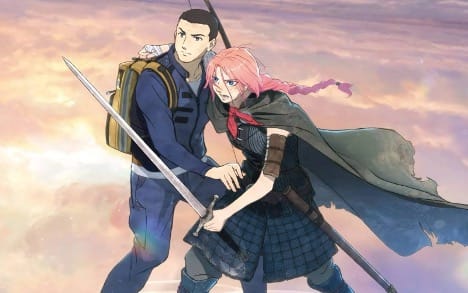
These two different worlds, both controlled by one-percenters, give Hosada a chance to paint with startling visual contrasts. The Otherworld often resembles a landscape of the moon on which Hosada projects surreal nightmare images of fire-breathing dragons and storms that symbolize marauding armies that clash by night.
Hosada also finds time to create a musical number for Scarlet and Hijiri, a male version of Ophelia, without the drowning. The interlude, paralleling the dance at the gym in “West Side Story,” is a relief from all the speechmaking as Hijiri echoes the pacifist messages of Scarlet’s father with numbing repetition.
Even in anime, or I should say especially in anime, action speaks louder than words at defining character. So it’s disappointing to the max that “Scarlet,” with much to admire in its ambitions, so often moves clumsily in fits and starts, diluting the mastery Hosoda showed in “Belle” and “the Oscar nominated “Mirai.” What with awkward transitions from 2D anime to 3D models and the endless talk-talk-talk, I sadly found the end of “Scarlet,” to quote Hamlet, “a consummation devoutly to be wished.”