
★★★½ (3½ out of 4)
James Gray is a puzzle to a lot of people. His films, starting with “Little Odessa” in 1994 and most recently with “Paper Tiger,” earn critical respect. Profit, not so much. That doesn’t matter to me and it shouldn’t to you, either. Gray is an artist in an industry where hack work grabs the most attention. No need to pass the hat since Gray, 57, has a lucrative side hustle making commercials for high-end luxury goods. Scorsese does the same thing, so hold the snark. The poet of anguished family drama has his reasons.
Gray’s background is Russian Jewish (the original family name was "Grayevsky" or "Greyzerstein”) with grandparents from western Ukraine. I mention this because Gray draws on his own history, either overtly or subliminally, in every one of the nine films he’s crafted so far. Check out “The Immigrant” and “Armageddon Time” and “The Lost City of Z,” if you haven’t already.
James Gray is the poet of anguished family drama. He takes us into a world with the darkness closing in, a world very much like our own.
Carefully composed images, patient storytelling and strong performances connect him to Coppola and the character-driven American cinema of the 1970s. Instead of old-hat, I’d call him old school with family as a continuing source of love and entrapment. His recurring territory is the collision between personal ambition and family loyalty, often shaped by class, immigrant identity and inherited expectations.
Back in the day, I met Gray for a quick coffee and four hours later we were still talking. This is a guy who will argue cinema into the wee smalls. His films have the same magnetic pull. “Paper Tiger," I should point out, is one of his best. Naysayers call him ponderous and overly fond of beautifully photographed suffering—slow, tough, dark and minus comfort with no qualms about repeating himself. Well, sometimes, maybe. But mostly Gray takes us into a world with the darkness closing in, a world very much like our own. And for me, that topic is timeless and terrifying.
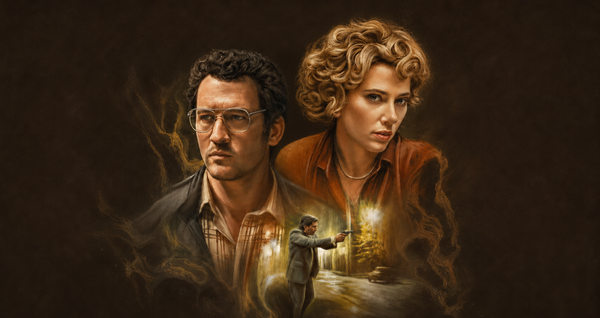
It sure is in “Paper Tiger.” Set (no surprise) in Queens in 1986, this crime drama focuses on two brothers whose pursuit of financial security puts their family in danger. Miles Teller excels as Irwin Pearl, an engineer raising two sons—Scott (Gavin Goudey), 18, and his younger brother, Ben (Roman Engel)—who bitch a lot to Irwin and their harried mother, Hester (an unrecognizable but unforgettable Scarlett Johansson). “Why do we always have to buy crappy stuff and live crappy?” asks Scott.
Hester dreams of living in the paradise of Great Neck, the Long Island suburb near her parents. Irwin sees the future in his successful older brother, Gary (Adam Driver), former NYPD brass now working private security. The reliably outstanding Driver plays the role with the unearned confidence of a born hustler. Gary proposes that he and Irwin combine their alleged expertise on a lucrative urban redevelopment project that involves cleaning up oil pollution on Brooklyn’s Gowanus Canal. “10,000 bucks each,” says Gary. “Easy.”
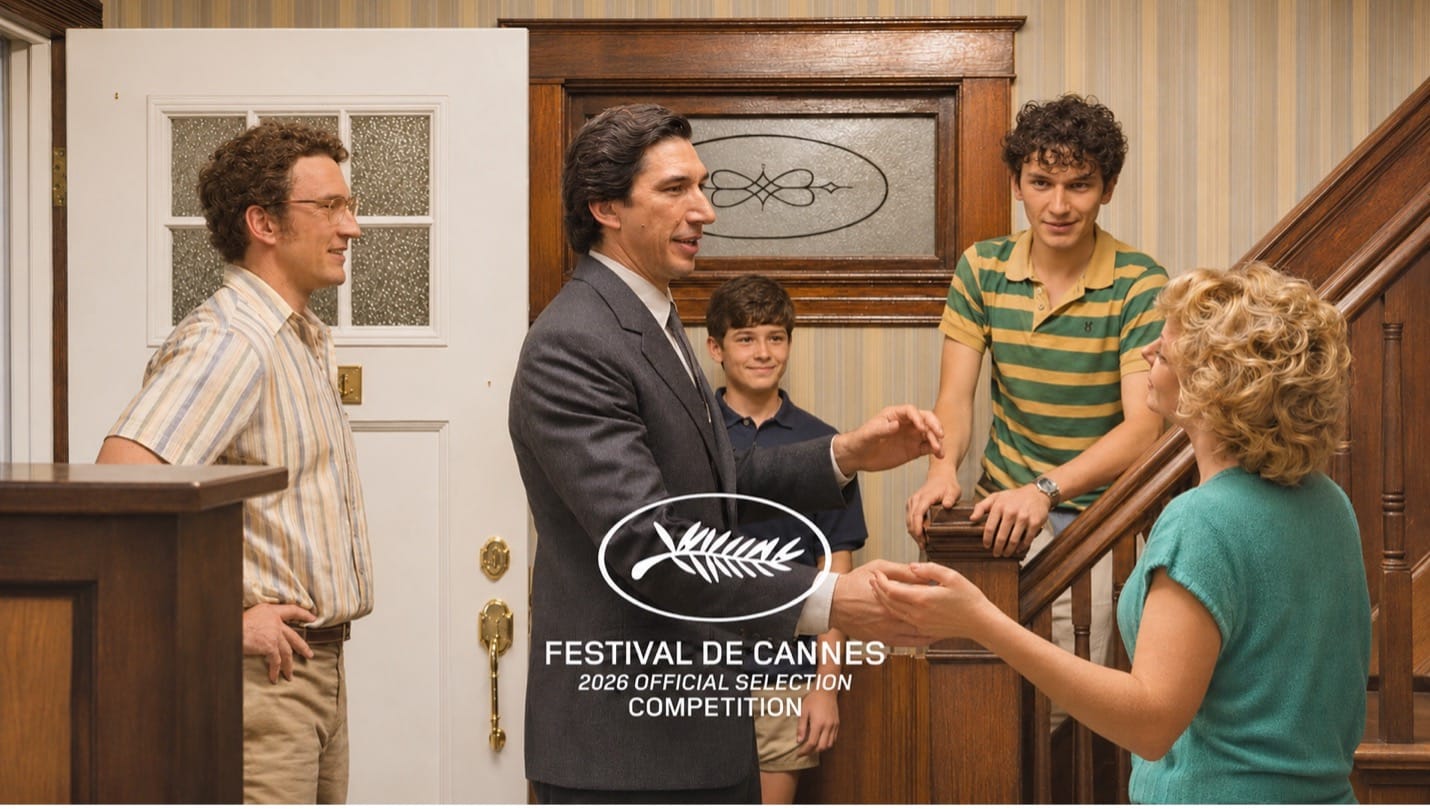
What the project really involves is helping the Russian mob hide their illegal dumping of toxic oil. When Irwin visits the site with his sons and discovers what’s happening, the jackpot job becomes a threat to the whole family, including Hester, who is facing her own health scare, as did Gray’s mother. When the mob sneaks into the family home at night, shooting Polaroids of each family member sleeping, the danger is palpable.
As in Arthur Miller’s “All My Sons,” Gray is illuminating what happens when a man’s effort to provide for his family becomes, through compromise and greed, the thing that endangers it. Gray directs his tale with a fierce escalating tension. And the actors deliver that tension with unstinting commitment. Johansson has been criticized for heightening Hester’s emotions at the expense of the surrounding naturalism, but it’s impossible not to feel her pain.
What Gray does in “Paper Tiger” is place the audience in the position of feeling the same trap as his protagonists. And what Driver does in his climactic scenes as Gary is immersive acting at its finest. In Gray’s world there is no separating commercial survival from moral accountability. We’re lost if the two don’t go hand in hand. Gray’s admirers have argued that their hero is unappreciated. I wouldn’t say that. But few filmmakers deserve to grow their audience as much as Gray does. If you’re a Gray newbie, start with “Paper Tiger,” the title hitting home in Gary’s words about the Russian mob: “These people are all paper tigers. They huff and puff but in the end it’s all about money.” Not to Gray it isn’t. Here’s a chance to find out why. Take it.