
★★½ (2½ out of 4)
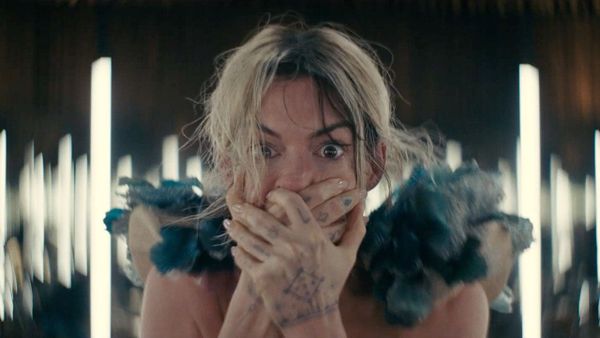
With POTUS digitally reimagining himself online as a healing Jesus, it’s hardly a scandal for Anne Hathaway to utilize religious iconography to cosplay a pop star called Mother Mary, halos and all. Critical blessings will be harder to come by for “Mother Mary” the movie, an allegory about the sins of worshiping at the altar of stardom. At least I think that’s what it is.
As cinema, “Mother Mary” is an unholy mess created by talented artists possessed by the demons of chaotic incoherence. No Hathahate on Hathaway, an Oscar winner for “Les Miserables” whose career has frequently led her to take risks in films by directors drawn to pushing the envelope. If you haven’t seen her in William Oldroyd’s “Eileen” or Nacho Vigalando’s “Colossal,’ stop reading and do so now.
It would be time better spent than watching “Mother Mary” in which you feel Hathaway’s eagerness to collaborate with director David Lowery, who when not cashing in on, say, a Disney reboot of “Pete’s Dragon,” creates ardent and audacious indie films, such as “A Ghost Story” and “The Green Knight.” “Mother Mary” starts on a high as well, though Lowery’s second-act follow-through is plagued by dead-end detours.
Anne Hathaway gives everything she’s got to an unholy mess created by talented artists possessed by the demons of chaotic incoherence.
Here's the longline: Long-buried wounds rise to the surface when iconic pop star Mother Mary (Hathaway) reunites with her estranged best friend and former costume designer Sam Anselm (Michaela Coel) on the eve of her comeback performance.
Simple enough, huh? Not really. Mary, birthed from a diva school that encompasses Madonna and Lady Gaga with a dash of “Reputation”-era Taylor Swift, looks like a rain soaked cat when she approaches Sam’s posh studio barn near London. Her name, derived from the Beatles anthem, “Let It Be,” suggests a cry for forgiveness. “When I find myself in times of trouble/Mother Mary comes to me/speaking words of wisdom/let it be.”
In this movie, no one comes close to letting it be. The traumatized Mary, who once threatened suicide on stage, is desperate for Sam to design a showstopping costume for her comeback performance, scheduled for the next day. Not bloody likely as Sam berates her erstwhile bestie for deserting her for other, mostly white designers. Sam has a dish of humiliation to dish out first. She’s enjoying this.
And you will, too, until Lowery goes off on a psychodrama binge, heavy with clanking symbolism but interspersed with wildly imaginative musical flashes of a touring Mary onstage choreographed by Dani Vitale with songs by Charli xcx, Jack Antonoff, and FKA Twigs (who cameos in the film).
Hathaway gives the role everything she’s got, especially when Sam demands that her supplicant go through the motions of performing with no sound or musical accompaniment. It’s a raw tour de force without the trimmings and the spectacle is electrifying until the realization dawns that “Mother Mary” will come down to two women throwing the past in each other’s faces.
That could have been quite the battle as well. Coel, so wonderful dissecting art and life with Sir Ian McKellen in Steven Soderbergh’s “The Christophers,” seems to be taking direction from the title of her Emmy-winning TV series, “I May Destroy You.”
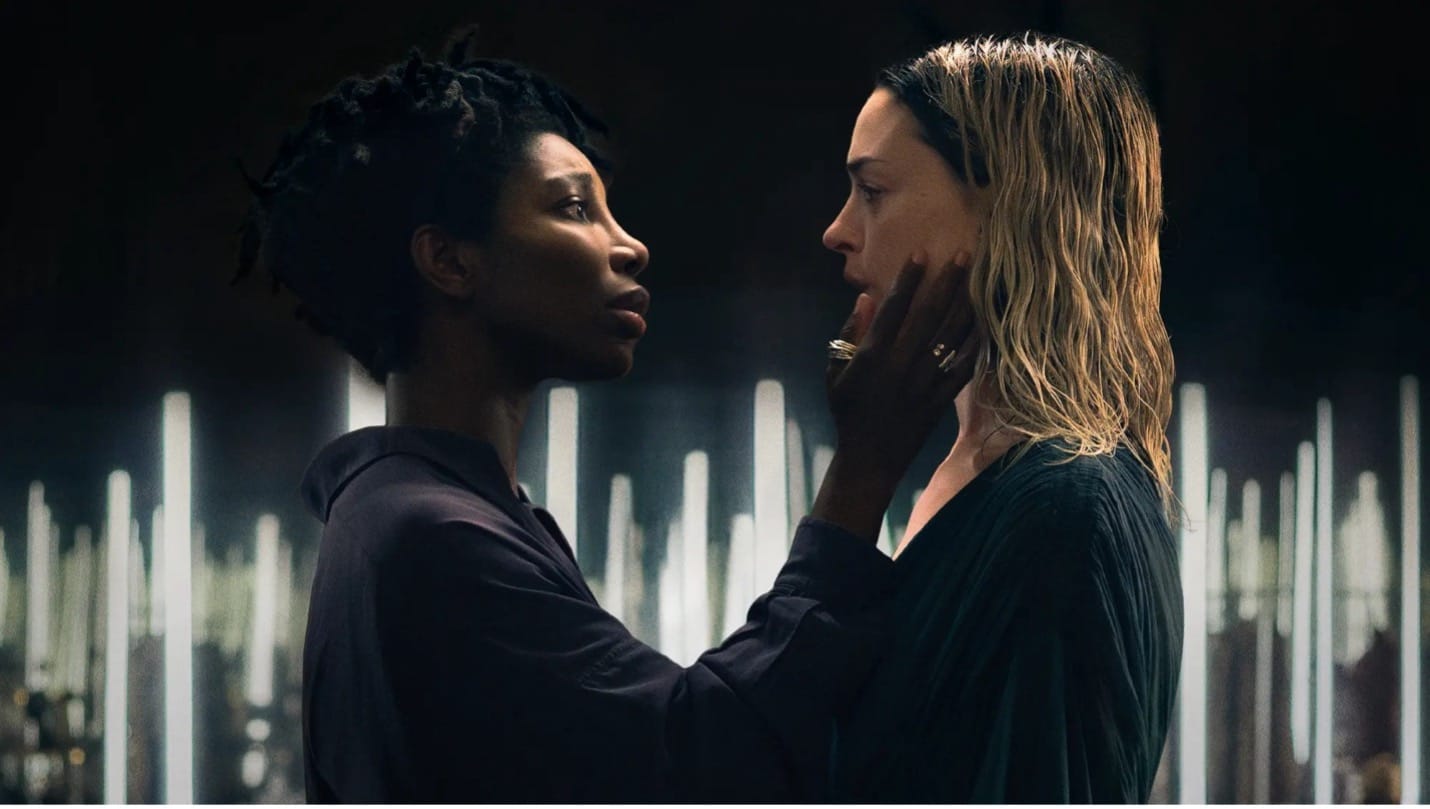
Things go wrong, at least for me, when a Ouija board is brought out and ghosts—imagined and literal in the form of a bolt of red fabric—start doing their woo-woo thing. Questions that Lowery presumably regards as banal—were Mary and Sam lovers?—are replaced with spiritual motifs that feel impenetrable and closed off to feeling.
“There may only be one of us left standing when this is over,” says Sam. That includes paying audiences. Leaving a movie open to interpretation is a reasonable choice. Shutting the door so only the filmmaker holds the secrets is something else entirely. Lowery, who claims to see human relationships in terms of quantum mechanics, is basically telling us, “I’m smarter than you are.” That may be true, but it’s no way to build a bridge with an audience or create a movie that lasts.