
★★★½ (3½ out of 4)
Vladmir Putin is no more than a portrait on an office wall in “Minotaur,” the latest cinematic incendiary device from director and cowriter Andrey Zvyagintsev, the Russian master behind “Loveless” and “Leviathan,” both represented Russia in the Oscar race for Best International Film. “Minotaur” is also hunting gold, but this time representing France, where Zvyagintsev has lived in exile basically since Putin declared war on Ukraine.
On the surface, “Minotaur is a loose re-imagining of Claude Chabrol’s memorably wicked 1969 “La Femme Infidele,” in which a husband’s revenge on his wife’s lover revitalizes his marriage. Hollywood did its own redo in 2002’s “Unfaithful,” in which Diane Lane did her career best acting as a wife who reacts to the emotional reserve of her husband (Richard Gere) by screwing a hunky bookseller (Olivier Martinez).
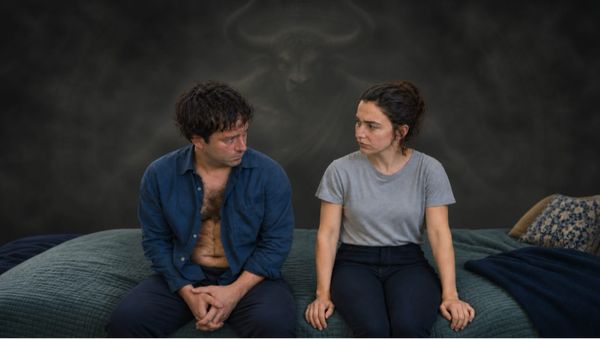
Carnality stole the show in those still vital thrillers. Not so in “Minotaur,” in which Zvyagintsev screws with the violence of the mind, perhaps including his own, but mostly with Gleb Morozov (Dmitriy Mazurov), a hotshot exec in the Russian provinces who lives in a chilly-chic glass-walled lakeside house with his wife, Galina (Iris Lebedeva), and their teen son, Seryozha (Boris Kudrin). One night, Gleb catches sight of Galina smiling at a text in their darkened kitchen. It’s from Anton (Yuriy Zavalnyouk), a handsome photographer Galina is having an affair with. Never mind that Gleb cheats often on Galina. When his company security chief (Mihails Samodahovs) delivers the lover’s address, Gleb vows revenge. And takes it.
The film’s concerns are intellectual, moral and philosophical—the Big Three of box office poisons—but Andrey Zvyagintsev is onto something that hasn’t dated: our own complicity in the world we made.
So far so much borrowed inspiration. That doesn’t interest Zvyagintsev. We’d all be disappointed if it did, though the lovely Lebedeva combines sexual longing with a real desire to be seen and understood. What Gleb represents to Zvyagintsev, who wrote the taut script with Simon Lyashenko, is power and the desperation that comes when there’s even a chance he’ll lose it.
Putin doesn’t appear in “Minotaur,” except as a framed photo hanging in the office of the mayor (Vladimir Friedman). But you feel his presence everywhere. Set in the fall of 2022, during Russia’s mobilization for its war in Ukraine, the film also includes the exodus of nearly 200,000 Russian men to avoid the draft. The mayor tells Gleb he needs a list of 14 men to draft from his company. Gleb knows the list is practically a death sentence. Does he comply? You bet.
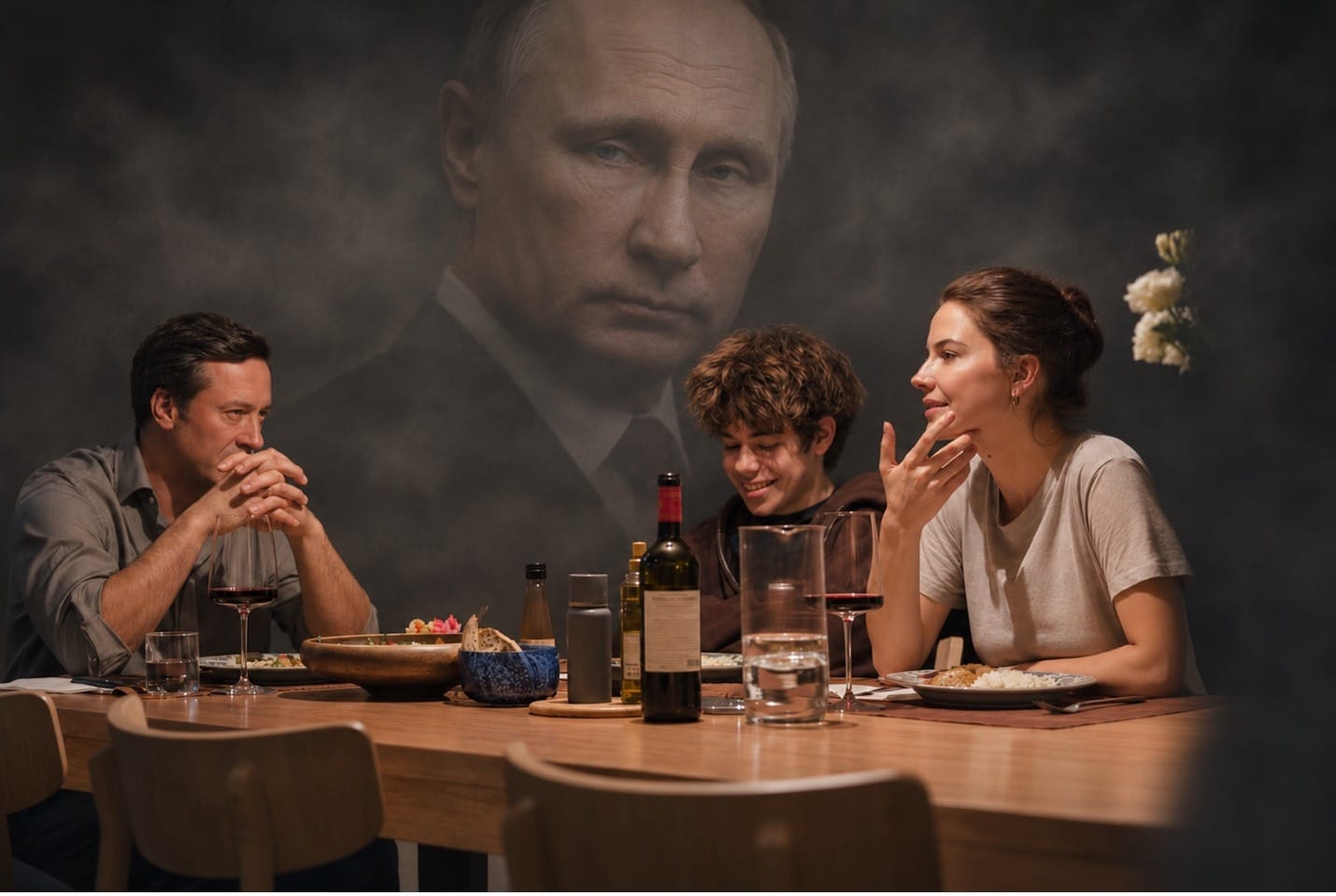
What does the title “Minotaur” have to do with all this? The Minotaur is a monster from Greek mythology with the head of a bull and the body of a man. In the Greek story, 14 young people are sent into the labyrinth as a sacrifice to the Minotaur. How many? Fourteen, just like the number demanded by the Putin regime.
The parallels are fascinating, and Zvyagintsev isn’t kidding when he ends his film with the Gleb family arriving in Greece. But it would all be academic showing-off if Zvyagintsev didn’t put a human face on the people caught in Putin’s trap. As played with exactitude and chilling skill by Mazurov, Gleb is a man caught in the act of losing his humanity in sacrifice to a greater good that never arrives, except as symbol of domination. In September, Zvyagintsev was added to the Putin list of traitorous foreign agents. It’s not hard to see why.
The film’s centerpiece is practically 20 minutes of wordless suspense, mixed with black comedy, in which Gleb tries to cover up his crimes, one against his wife’s lover, the other against the man he himself used to be. Zvyagintsev shoots everything in broad daylight, perhaps trying to illustrate that in modern Russia, evil is done in plain sight, whether it’s the crimes and misdemeanors of Gleb or Putin in the Ukraine. The world watches and does nothing.
And yet even as Zvyagintsev shows how Gleb and his family make accommodations to evil in the name of survival, this director refuses to mire his film in pessimism. Hints of hope still flicker even in the void. There’s little doubt that “Minotaur” will be passionately debated. The film’s concerns are political, moral and philosophical—the Big Three of box office poisons— but Zvyagintsev is onto something that hasn’t dated: our own complicity in the world we made.