
★★★½ (3½ out of 4)
The reliably superb Willem Dafoe is nothing short of astounding in “Late Fame” as Ed Saxberger, a formerly young, formerly practicing poet who had one collection of poems published in 1979 called “Way Past Go.” Since then, this East Village remnant of bohemia has been working in anonymity, sorting letters for the New York postal service and hanging with blue-collar friends who have no idea of his hidden life of the mind. About 20 years earlier, working-class poet Charles Bukowski did the same thing.
But Saxberger is no Bukowski. At least not yet. Not until a young academic who calls himself Meyers (Edmund Donovan) corners him on the street and claims that Ed is an undiscovered blue-collar bard whose poems speak harsh truths. “They’re moving, they’re saving, they’re timeless,” the kid tells his idol. “I work in a post office,” says Ed, a comment that sparks Meyers to crack, “I always knew you were a man of letters.”
Meyers is not just a fan, he’s a disciple who is part of group of poets, artists and intellectuals who call themselves the “Enthusiasm Society,” whose members want to put Ed’s name out there where he can be heard. They’re not influencers. This group hates influencers. They’re champions of art and enemies of smartphone addiction and sometimes they’re full of it.
Willem Dafoe delivers a master class in acting.
How Ed reacts to their enthusiasm and how he reacts to putting himself out there again in a hostile world is the subject of “Late Fame,” a film directed with captivating humor and subtle feeling by Kent Jones, a former film critic whose superb 2018 fiction debut, “Diane,” starred May Kay Place as an aging boomer. Jones’s previous film, the 2015 documentary “Hitchcock/Truffaut,” was an appreciation of two masters of cinema from two different generations, just as “Late Fame” is an appreciation of Ed, from a script by Oscar nominee Sally Birch (“May December”) that thrives on what’s said in the space between words.
How Ed reacts to being rediscovered—he truly is dazed and confused—is the subject and the substance of “Late Fame,” which rejiggers a posthumously published novel by Arthur Schnitzler (who wrote the 1926 novella “Dream Story” on which Stanley Kubrick’s “Eyes Wide Shut” was based). In short, “Late Fame” is about the past colliding with the present resulting in unavoidable collateral damage.
The approach Jones takes to the material is funny, touching and vital. Dafoe makes Ed’s reluctance as palpable as his yearning. It’s when Ed agrees to meet his admirers in person that the trap is set. Is Meyers just a legacy rich brat with a new project? Donovan’s layered portrayal contains multitudes. Is Meyers cosplaying the vie boheme that Ed once lived for real?
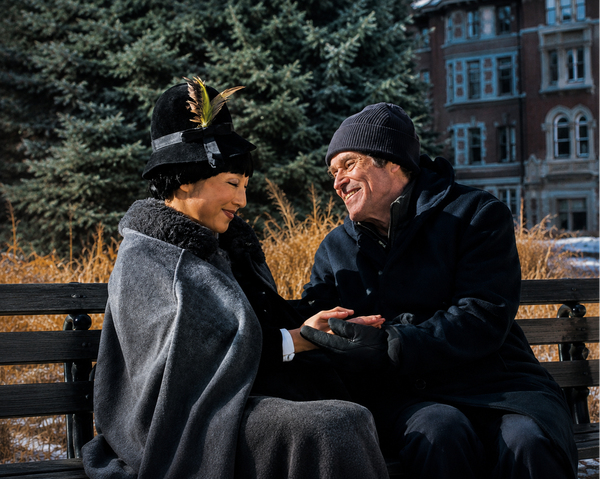
The answer might come from the other major new person in Ed’s life. Her name is Gloria and she’s played gorgeously by Greta Lee, the luminous star of “Past Lives,” a film also alerts to clashing times and cultures. Gloria is the only woman in the group. She’s older than the others and savvier. Is she flirting with Ed or sizing him up as a mark? Lee suggests both possibilities. “You must have been beautiful when you were young,” she tells Ed and every film lover already knows the answer to that one.
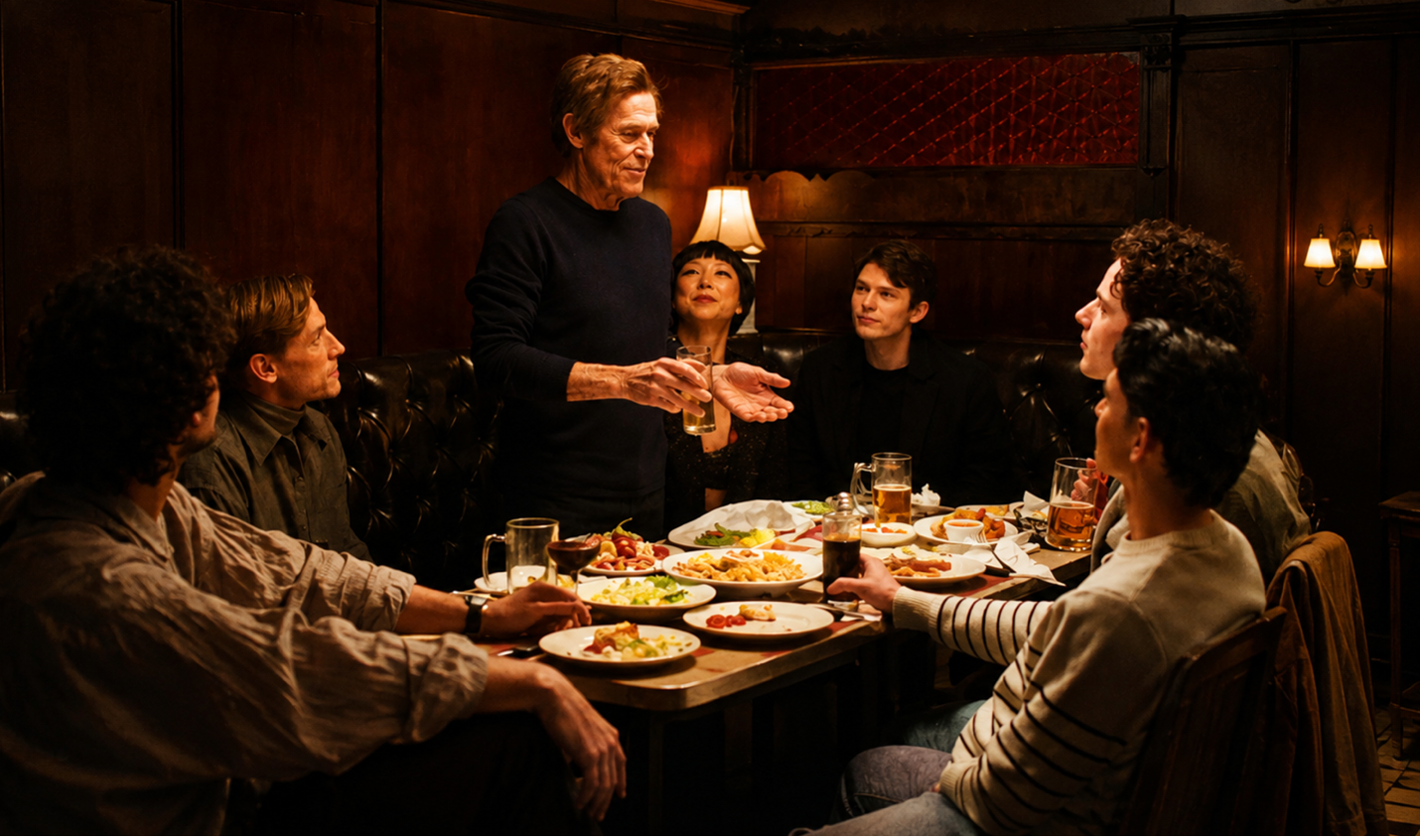
Gloria also displays an unfakeable talent when she gets up on stage to sing Brecht/Weill’s “Surabaya Johnny,” a tragic ballad about a young, naive girl betrayed by a man who used her for money and ruined her youth. It’s Gloria doing the using now, but Lee keeps the tantalizing feeling alive that the connection between Gloria and Ed could be real.
Everything you need to know about Ed is there in Dafoe’s haunted and haunting performance. His eyes are reflecting pool of the exhilaration and exhaustion that comes with thinking, even fleetingly, that second chances are possible. This is a master class in acting for which attendance should be mandatory. At a reading of his work—Meyers wanted a new poem, the poet significantly doesn’t provide one—Ed shows us the artist that was and a hard-won wisdom about second chances. “Late Fame” is a slow build of a film. But thanks to Oscar-caliber work from Dafoe and Lee and Jones’s keen talent for reading the human heart, it’s also a film that sneaks up and floors you.