
★★★½ (3½ out of 4)
There was a slickness to “Elvis,” the Baz Luhrmann biopic that won star Austin Butler a Best Actor Oscar nomination but never captured the many splendored carnal thing of watching the hip-thrusting King in person, singing the devil’s music with the voice of an angel.
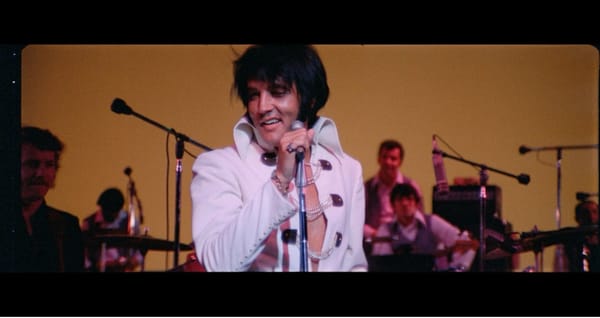
That’s the raw, teasing, titillating, on-stage god captured in “EPiC: Elvis Presley in Concert,” Luhrmann’s ardent assemblage of found concert footage from the early 1970s where future generations should look if they want to get up close to what the prudes called his sinful magnetism. The King’s 31 Hollywood films were assembly line product —“Viva Las Vegas” excepted— next to the swaggering, sweaty, deep-throated Presley who leaps off the stage and onto screen in “EPiC: Elvis Presley in Concert.” That Elvis might just really live forever.
“EPiC” is on view now at your local multiplex, after a week’s runup run in Imax, and it’s one of the most stirring concert films ever, even if you never heard Elvis in all of his 20th-century glory. The only think annoying about the whole enterprise is that lower case “i” in the title, meant to represent the acronym for the title, with the 'i' standing for the word "in." Forgive studio execs for they habitually know not what they do.
For 100 essential minutes, The King is back on his throne and thrillingly alive with purpose and possibility. I’d call that a must-see.
Luhrmann’s hunt for unseen footage from two previous documentaries, “Elvis: That’s the Way It Is” and “Elvis on Tour,” ended with 68 boxes of both 35mm and 8mm footage and outtakes found in the Warner Bros. archives preserved in salt mines in Kansas, plus the "gold jacket" performance from the Hawaii concert in 1957. Over two years, that footage was restored and synced to existing audio sources by Luhrmann's team. A 45-minute audio recording was also uncovered of Presley talking about his life story. All this material forms the basis of something that Luhrmann feels “befits the magnitude of Elvis as a performer but also offers deeper revelations of his humanity and inner life."
And it’s all here in “EPiC,” with Elvis on guitar doing “Little Sister” and moving into the Beatles anthem, “Get Back.” Later, in the gospel section, he does “How Great Thou Art” in a version that’s never been released. The thrill of discovery is everywhere in this movie with a fluidity that never suggests the backbreaking work and research that went on behind the scenes.
There are more than two dozen songs, including “That’s All Right,” “Burning Love” and “In the Ghetto,” and Elvis performs them as if for the first time and with a real sense of discovery about how they work. Luhrmann even leaves in the screwups when Elvis misses a cue or a lyric and just laughs it off. This imperfect side of the icon is totally lacking in his polished Hollywood movies that seem embalmed compared to spontaneity on view in “EPiC.”
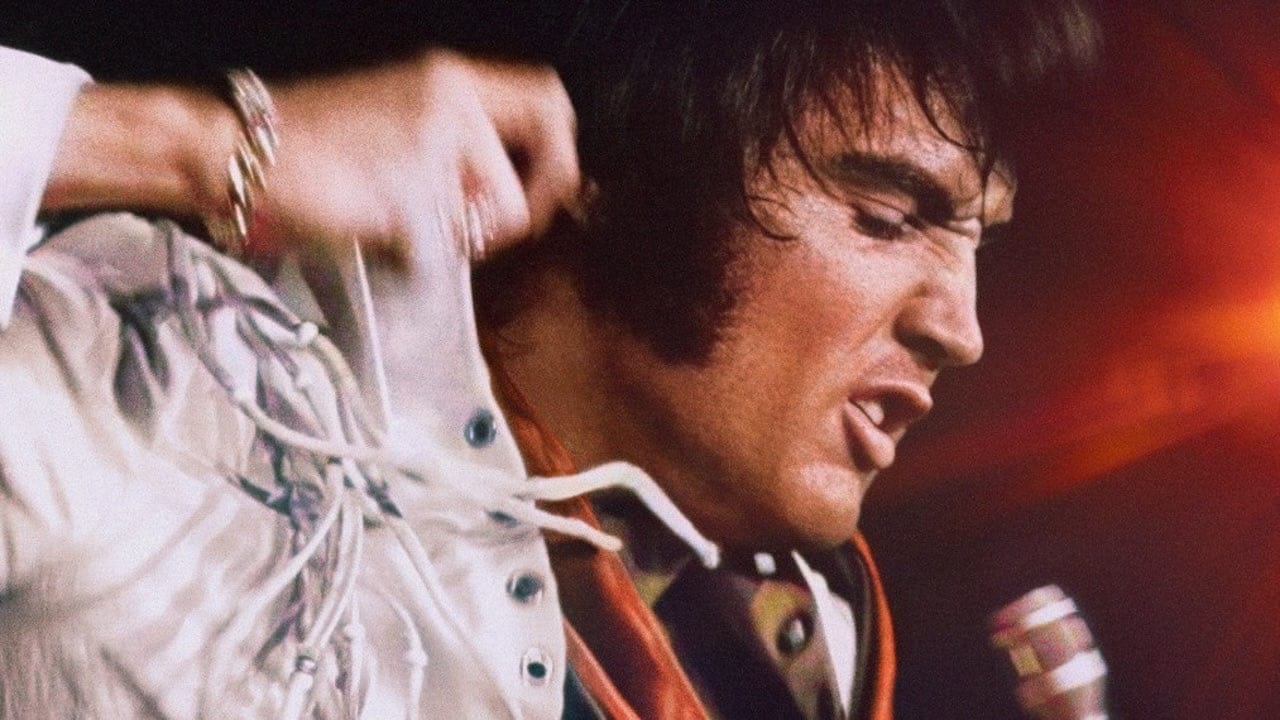
There are fleeting references to his adored, late mother and photos of him with wife Priscilla and baby daughter, Lisa Marie. But the physical decline that defined the later years in which he became a white jump suited caricature of himself are nowhere to be found. “EPiC” is Elvis at his loosest, livewire best, voice and body in tune with the way he saw himself instead of the clay his manager, Col. Tom Parker, molded into a cash cow for sale to the highest bidder. For 100 essential minutes, The King is back on his throne and thrillingly alive with purpose and possibility. I’d call that a must-see.