
★★★½ (3½ out of 4)
To be or not to be thrilled by Andrew Scott’s heart-filled-to-bursting performance in “Elsinore”—that isn’t really the question. There’s no doubt you will be, thrilled, I mean, also tickled with helpless laughter before Scott shows how life’s absurdity can all of a sudden reduce you, also helplessly, to tears. Note to the Academy: if you’re not already engraving the name Andrew Scott on next year’s Best Actor Oscar, get busy.
What is this “Elsinore?” It’s a bracingly brilliant acting master class from Scott, who’s been continually astonishing us from his days as the “hot priest” on “Fleabag” to his riveting “Ripley” to the personal ache he invested in “All of Us Strangers” and his own stage attempt at Hamlet in 2017. He’s at his soaring best in “Elsinore,” so act accordingly.
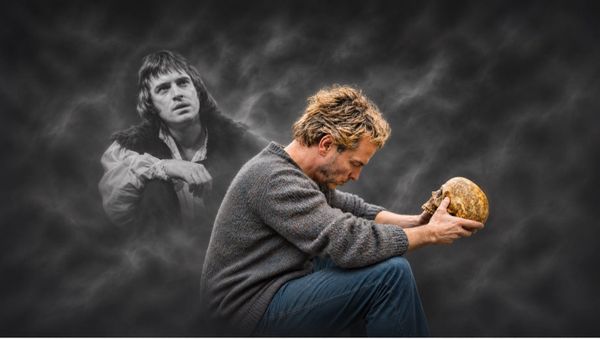
The movie itself, choppily directed by Simon Stone from a wicked streak of a script by Stephen Beresford, doesn’t know when to slow down. Luckily, Scott does. Elsinore is the name of Hamlet’s castle in Denmark where Broadway lyricists Betty Comden and Adolph Green wittily claimed, “A ghost and a prince meet and everyone ends in mincemeat.” It’s also the stage of the National Theater in London where Scottish thespian Ian Charleson, not yet 40, will spend his final weeks scaling Shakespeare’s Mt. Everest of a role. On Jan. 6, 1990, it literally kills him, along with AIDS, just seven weeks after his final curtain. But as Charleson told his doctor, “I’d rather die of Hamlet than AIDS.”
Note to the Academy: if you’re not already engraving the name Andrew Scott on next year’s Best Actor Oscar, get busy.
Just follow Scott, who shows how acting is a vocation as well as a career. “Elsinore” is a tragedy about a tragedy. And though Scott lets Charleson’s exhaustion bleed through his portrayal as the virus takes its toll, the key note Scott plays is exhilaration and he makes us live and breathe it along with Charleson.
The film kicks off with an infamous Hamlet curse. Daniel Day Lewis, who’d been playing the role at the National in 1989, suddenly walked off during Hamlet’s scene with his ghost father and never returned to the stage again. Any stage. Charleson quips that Hamlet is an impossible role to play, especially in this impossibly large theater (1100 sets), and that audiences bought tickets just to see Day Lewis in tights. He jokes that no one remembers his major film role as Olympic runner Eric Liddell in 1981’s Oscar-winning “Chariots of Fire” because all they recall is the earwormy Vangelis theme music. The truth hurts.
Scott, however, always lets us see how much Charleson hungers to play Hamlet. So when his friend, director Richard Eyre (sympathetically played Johnny Flynn), offers the chance to step in for Day Lewis, Charleson is keen. One catch: he’s discovered the first AIDS lesion on his face. His doctor, Margaret Johnson (the reliably superb Olivia Colman good soldiering on about the preservation of life), is against it. “No one ever walked out of ‘Hamlet’ saying, ‘What a short evening of light entertainment,’” she cracks.” But Charleson persists, and Eyre, who previously directed his star to raves in the musical “Guys and Dolls,” supports him.
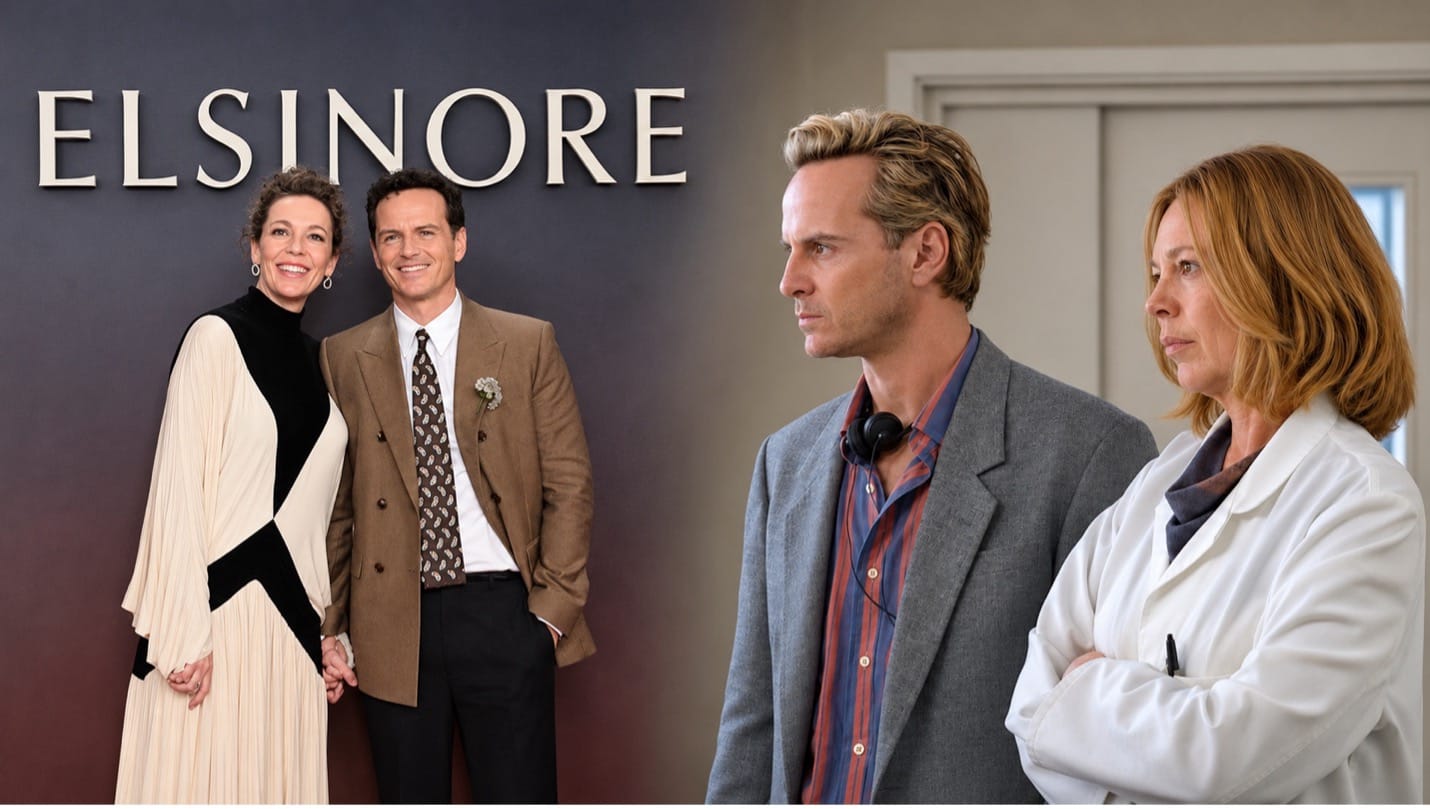
The film is about that herculean challenge. Charleson tells his director he wants to keep his virus a secret from fellow actors and critics who might condescend by saying, “Oh, he’s good for someone with AIDS.” When his friend, the gay filmmaker Derek Jarman (David Dawson), tells Ian that coming out will help publicize his condition, he claims, “I don’t want pity.”
Was Charleson also afraid that coming out might hurt his career? You can feel those beats in Scott’s interpretation, but Charleson did instruct his representatives to tell the truth after his death. “Elsinore” does Charleson the favor of not trying to uncomplicate him. We see his relationships with former lovers like Georgie (Luke Thompson) and friends like casting director Patsy (Billie Piper), but the most wrenching scene is the one where Charleson comes out to his parents, played by Georgie Glen and the superb Peter Mullan.
Yet the relationship that most guides “Elsinore” is the one between Charleson and Shakespeare. Lines from “Hamlet” as Charleson speaks the words to himself or on a rehearsal stage, move the action while also commenting on it. Scott’s reading of Hamlet’s “the readiness is all,” just before Hamlet’s fatal duel, speaks meaningfully of how to approach death with courage and acceptance, rather than despair.
It’s a shame that the film’s conclusion, a jumble of images and sound signifying nothing but overkill, somewhat mutes the impact but not the pleasures of what came before. All praise then to Scott for giving us a performance for the ages.
At London’s National Theatre, actors bang on dressing-room windows across a courtyard to salute a colleague heading onstage. In “Elsinore,” that custom becomes a battle cry for Charleson as he takes on the beast that is “Hamlet” with death at his heels. By the end, I wanted to pound those windows for Scott. My bet is you will, too.